
Asher Butt
For much of the evening, it appeared that Quetta Gladiators had constructed a match-winning total. A recovery from 1/2 to 195/6, anchored by a dominant third-wicket partnership, should have placed them firmly in control. Yet, what followed was not merely a successful chase by Karachi Kings, but a complete dismantling of Quetta’s bowling plans and tactical assumptions. This was a game that exposed the difference between posting a strong total and defending one.
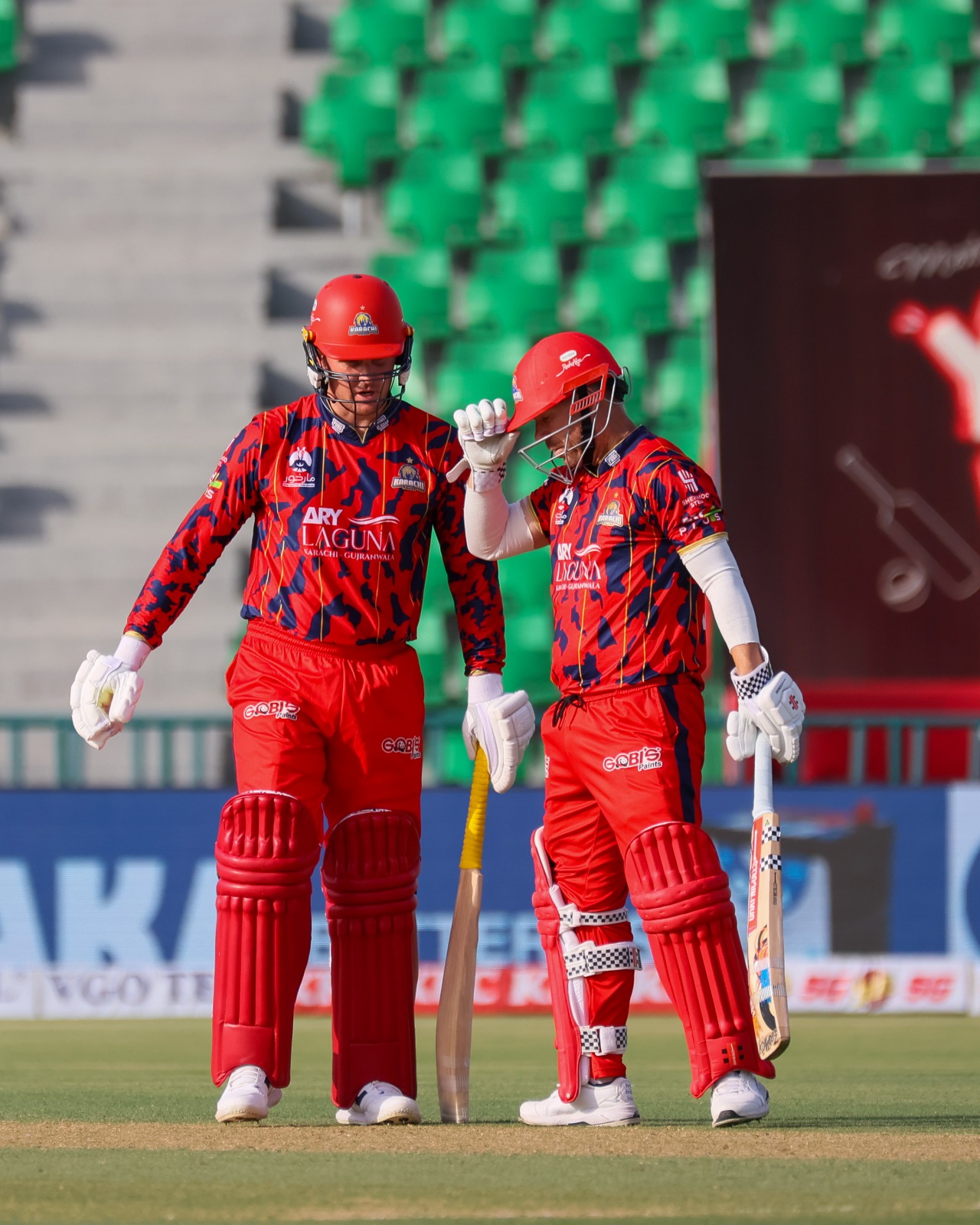
At the core of Karachi’s emphatic nine-wicket victory was the unbeaten 141-run stand between David Warner and Reeza Hendricks—a partnership that did more than chase runs; it neutralized pressure, erased scoreboard relevance, and highlighted the structural fragility in Quetta’s bowling attack.
Quetta’s innings itself was a study in recovery and missed opportunity. The early collapse should have forced a cautious rebuild, but instead, the counterattack from Rilee Rossouw and Saud Shakeel was both necessary and brilliantly executed. Their 148-run stand was not just about run accumulation; it was about reclaiming momentum and dictating terms. Rossouw’s aggression against spin and pace alike, combined with Shakeel’s calculated stroke play, allowed Quetta to accelerate without losing shape.
However, the critical flaw lay in Quetta’s inability to push beyond “competitive” into “commanding.” At 149/2 in the 15th over, they were ideally positioned to breach 210, a total that would have significantly altered the dynamics of the chase. Instead, a cluster of wickets between overs 15 and 17 stalled momentum. This phase, often overlooked in high-scoring games, proved decisive. Quetta did not collapse, but they plateaued—and in modern T20 cricket, that distinction is crucial.
Karachi’s chase, by contrast, was defined by clarity and ruthless execution. The early dismissal of Jason Roy had little impact on their approach. Instead of recalibrating conservatively, Karachi doubled down on intent. Warner’s innings was a masterclass in controlled aggression—his ability to dominate the powerplay without overextending risk ensured that Karachi were always ahead of the required rate.
What made the chase exceptional was not just the scoring rate, but the absence of pressure phases. Typically, even dominant chases encounter moments of consolidation. Here, those moments never arrived. Hendricks complemented Warner perfectly, rotating strike efficiently while capitalizing on loose deliveries. His acceleration post-powerplay ensured that Quetta could not regain control through middle-overs containment.
The failure of Quetta’s bowling unit was both tactical and executional. Their attack lacked variation, but more importantly, it lacked adaptability. Bowlers persisted with predictable lengths, allowing Karachi’s batters to settle into rhythm. Alzarri Joseph and Khalil Ahmed, expected to provide breakthroughs, instead became avenues for scoring. The absence of a genuine wicket-taking threat in the middle overs meant Karachi could build their chase without disruption.
Spin, often a controlling factor at Lahore, was equally ineffective. Abrar Ahmed was unable to impose pressure, largely due to the proactive approach from Karachi’s batters. Rather than allowing him to dictate terms, they attacked his lengths early, forcing defensive adjustments that further reduced his impact.
Beyond tactics, the psychological dimension of the game cannot be ignored. Quetta, having recovered so impressively with the bat, appeared to carry a sense of complacency into the second innings. Their body language lacked urgency, particularly after the powerplay, where Karachi had already seized control. In contrast, Karachi exhibited a clear, unified approach—every phase of the chase aligned with a defined plan.
This result also underscores a broader theme in the tournament: the diminishing value of “par” totals. In conditions favoring batting, 190-plus is no longer a guarantee of control; it demands exceptional bowling discipline to defend. Quetta’s inability to recognize and adapt to this reality proved costly.
For Karachi, this victory is more than just two points—it is a statement of intent. Their batting unit, often criticized for inconsistency, displayed cohesion and composure. Warner’s anchoring presence, combined with Hendricks’ adaptability, provides a template for future chases.
For Quetta, however, the defeat raises deeper concerns. Their reliance on batting to mask bowling deficiencies is increasingly unsustainable. Unless they develop greater variation and situational awareness with the ball, even strong totals will continue to look vulnerable.
Ultimately, this was a contest that highlighted a fundamental truth of T20 cricket: control is fleeting, and momentum is everything. Quetta built it, but Karachi seized it—and once they did, they never let go.




