
Asher Butt
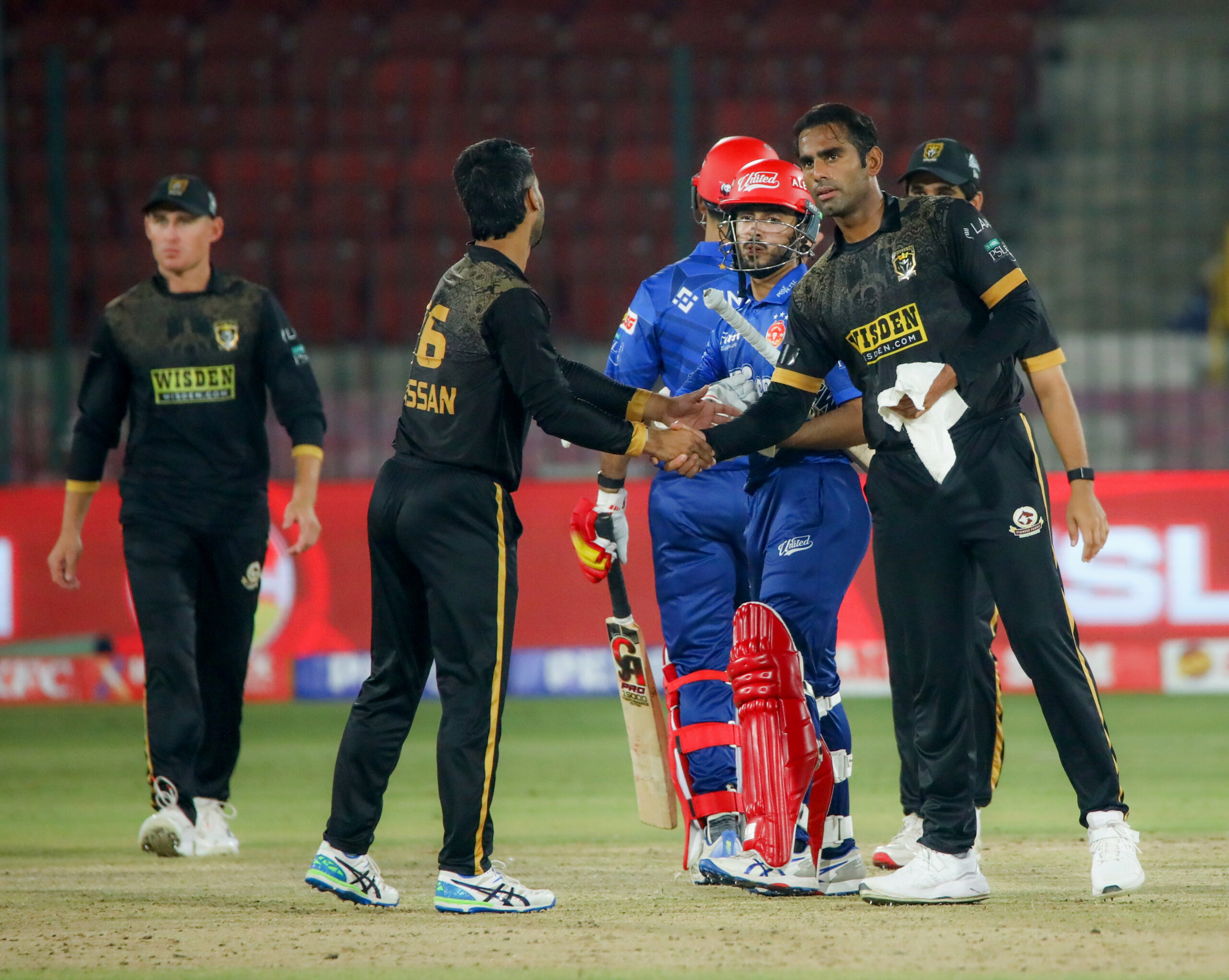
In a tournament defined by high scores and fine margins, this contest stood out for the sheer imbalance between the two sides. Islamabad United’s emphatic win over Hyderabad Kingsmen was not merely a dominant performance—it was an exposure of structural and tactical deficiencies that have quietly lingered in Hyderabad’s campaign. This was less about Islamabad’s brilliance and more about Hyderabad’s inability to withstand pressure in a must-win scenario.
The defining phase of the match came within the first five overs of Hyderabad’s innings. Losing three wickets inside the powerplay is not uncommon in T20 cricket, but the manner of those dismissals reflected deeper issues. There was no attempt to stabilize, no recalibration of risk. Instead, Hyderabad’s top order played as if conditions were still conducive to free scoring, ignoring early movement and disciplined lines from Islamabad’s seamers. This disconnect between intent and situation set the tone for what followed—a collapse that felt inevitable rather than accidental.
At the center of Islamabad’s early dominance was Richard Gleeson, whose opening spell dismantled the Kingsmen’s top order. His lengths were not extraordinary, nor was there extravagant swing, but his discipline forced Hyderabad into errors. More importantly, he exposed a recurring flaw: Hyderabad’s top-order batters lack the adaptability to shift from aggression to consolidation when required. This rigidity has cost them in high-pressure games, and here it proved fatal.
As the innings progressed, the burden of recovery fell on Usman Khan, whose unbeaten 25 became a symbol of isolation rather than resistance. His strike rate, significantly below par for T20 standards, highlighted the absence of support at the other end. Hyderabad did not just lose wickets—they lost partnerships, and with them, any chance of rebuilding. In modern T20 cricket, collapses are often mitigated by counterattacking cameos; Hyderabad produced none.
Islamabad’s middle-overs control further underlined the tactical gap between the two sides. Shadab Khan and Imad Wasim operated with clarity and precision, targeting Hyderabad’s indecision. Their approach was simple but effective: vary pace, attack the stumps, and force batters to manufacture shots. Hyderabad, already under pressure, responded with low-percentage strokes, leading to a cascade of wickets that effectively ended the contest before the innings break.
However, this collapse cannot be viewed in isolation. It reflects a broader pattern in Hyderabad’s campaign—an overreliance on individual brilliance rather than collective structure. When players like Usman Khan or Marnus Labuschagne fail to dominate, the team lacks a fallback plan. There is little evidence of role clarity or contingency strategies, which becomes glaringly apparent against disciplined bowling units.
If Hyderabad’s batting was a study in dysfunction, Islamabad’s chase was an exhibition of clarity. Despite losing an early wicket, they approached the target with calculated aggression. The partnership between Sameer Minhas and Mohsin Riaz was not just about scoring quickly—it was about eliminating any possibility of pressure. By attacking from the outset, they ensured that the required rate remained irrelevant, effectively turning the chase into a formality.
What stood out in Islamabad’s approach was their understanding of game context. Chasing a low total often brings its own challenges, particularly the temptation to overhit. Instead, they combined controlled aggression with smart shot selection, targeting Hyderabad’s weaker bowlers and capitalizing on loose deliveries. Mohsin Riaz’s high strike rate innings, in particular, demonstrated how intent, when aligned with awareness, can decisively tilt a game.
For Hyderabad, the defeat carries implications beyond just the result. In a tightly contested playoff race, net run rate plays a crucial role, and such a heavy loss could prove damaging. More importantly, it raises serious questions about their mental resilience. In a must-win game, they failed to compete, and that psychological fragility could undermine their campaign even if results elsewhere keep them in contention.
Islamabad, on the other hand, will view this performance as a statement of readiness for the playoffs. Their bowling unit showed cohesion, their batting displayed maturity, and their overall execution reflected a team peaking at the right time. Unlike Hyderabad, they appear to have clarity in roles and the flexibility to adapt to match situations.
Ultimately, this was not just a defeat for Hyderabad Kingsmen—it was a collapse of intent, planning, and execution. Islamabad United did what strong teams do: they identified weaknesses, applied sustained pressure, and closed out the game without hesitation. In a tournament where margins are often slim, this match was a reminder that when one side falters structurally, the result can be ruthlessly one-sided.




