Controlled chaos, tactical flexibility and Zalmi’s missed margins
Asher Butt
Lahore Qalandars’ six-wicket win over Peshawar Zalmi in a high-scoring encounter at Gaddafi Stadium was less about brute force and more about game awareness under pressure. Chasing 200 against the tournament’s most consistent side, Lahore didn’t just outplay Zalmi — they out-thought them at decisive moments, exposing subtle tactical gaps that ultimately ended Zalmi’s unbeaten run.
At first glance, a target of 199 should have strongly favored Zalmi, especially after a first innings built on structured acceleration. The partnership between Babar Azam and Michael Bracewell had provided both stability and late-innings explosiveness. Yet, beneath the surface, Zalmi’s innings carried a flaw: it peaked in patches rather than sustaining relentless pressure. Despite the impressive finish, their scoring tempo between overs 7 to 14 allowed Lahore to retain some control, preventing the total from crossing the psychological 210-mark — a threshold that often forces chasing sides into desperation.
That nuance proved critical.
Lahore’s chase began with clarity of plan rather than reckless aggression. The powerplay yielded 64/1 — not extraordinary, but efficient enough to neutralize scoreboard pressure. Mohammad Naeem’s brief cameo and Abdullah Shafique’s explosive 25 off 11 balls served a clear tactical purpose: disrupt lengths early and deny Zalmi’s bowlers any rhythm. This early disruption forced Zalmi into reactive bowling changes, a theme that persisted throughout the innings.
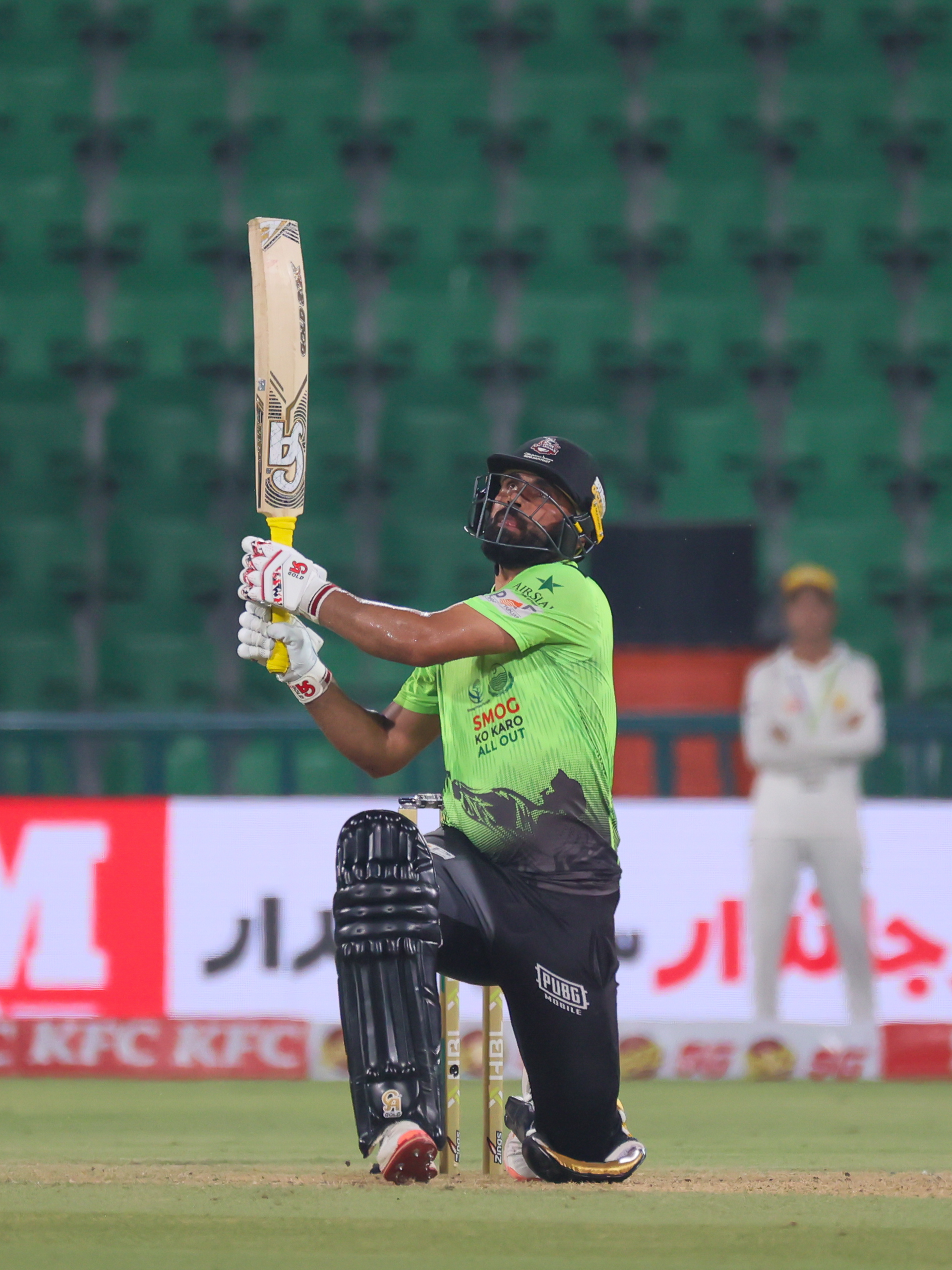
The real backbone of the chase, however, was the third-wicket partnership between Fakhar Zaman and Charith Asalanka. Their 53-run stand may not dominate headlines, but it was the phase where Lahore recalibrated the chase. Fakhar, often known for high-risk strokeplay, showed unusual restraint. His 58* off 47 balls was not a typical match-winning blitz but a calculated anchor role, ensuring Lahore always had a batter set deep into the innings.
This shift in Fakhar’s approach reflects a broader evolution in Lahore’s batting philosophy. Rather than relying solely on explosive starts, they demonstrated the ability to pace a chase — a quality that becomes invaluable in knockout scenarios.
Zalmi’s bowling, in contrast, lacked cohesion at crucial junctures. While individual spells had merit, there was no sustained pressure through disciplined phases. Sufiyan Muqeem and Ali Raza leaked runs at key moments, but the larger issue was fielding inefficiency. The dropped catch of Daniel Sams proved particularly costly — not just in runs conceded, but in momentum lost.
Fielding errors often carry a psychological weight, and this was evident in Zalmi’s body language thereafter. Sams capitalized immediately, turning a potentially tight finish into a controlled chase. His unbeaten 35 off 15 balls, combined with Fakhar’s stability, ensured Lahore never needed a last-over scramble.
Another critical phase was the fourth-wicket stand between Fakhar and Sikandar Raza. Their 42-run partnership injected urgency just when the required rate threatened to climb. Raza’s 29 off 10 balls was a classic momentum-shifting cameo — short, sharp, and disruptive. It forced Zalmi to retreat defensively, spreading the field and conceding easy singles, which further eased the equation.
From a tactical standpoint, Zalmi’s inability to control the middle overs stands out. Despite having a strong spin option in Muqeem and part-time variations from Iftikhar Ahmed, they failed to build dot-ball pressure. Modern T20 chases are rarely lost through boundaries alone; they unravel through an inability to string together quiet overs. Zalmi fell into that trap.
Lahore’s composure in the death overs, however, was the defining contrast. Unlike many chasing sides that panic under rising required rates, Lahore maintained clarity. Their approach against pace — particularly targeting fuller lengths and exploiting gaps rather than swinging blindly — reflected preparation and situational awareness.
What also stands out is Lahore’s adaptability. Earlier in the tournament, they have been overly dependent on top-order aggression. Here, contributions were spread across phases: a brisk start, controlled middle overs, and a clinical finish. This layered batting effort makes them significantly more dangerous heading into the business end of the tournament.
For Zalmi, this defeat is less about the result and more about exposed vulnerabilities. Their batting remains formidable, but their bowling lacks the same consistency under pressure. More importantly, their fielding — often overlooked in analysis — could become a decisive weakness in tight playoff encounters.
In the broader context of the PSL, this match serves as a reminder that T20 games are increasingly decided by execution in small moments rather than headline performances alone. Lahore seized those moments — a dropped catch punished, a quiet over capitalized, a partnership timed to perfection.
Ending Zalmi’s unbeaten run is significant, but the manner of the victory is what truly matters. Lahore didn’t chase 199 through chaos; they dismantled it through control, phase by phase — a sign of a team peaking at the right time.