
Scale insects: The silent sap-sucking pests every gardener should know about
By Asher Butt
Healthy plants can quickly lose their beauty and productivity when attacked by scale insects—tiny sap-sucking pests that often go unnoticed until serious damage has already occurred. These insects attach themselves to leaves, stems and branches, feeding on plant sap and weakening the plant over time.
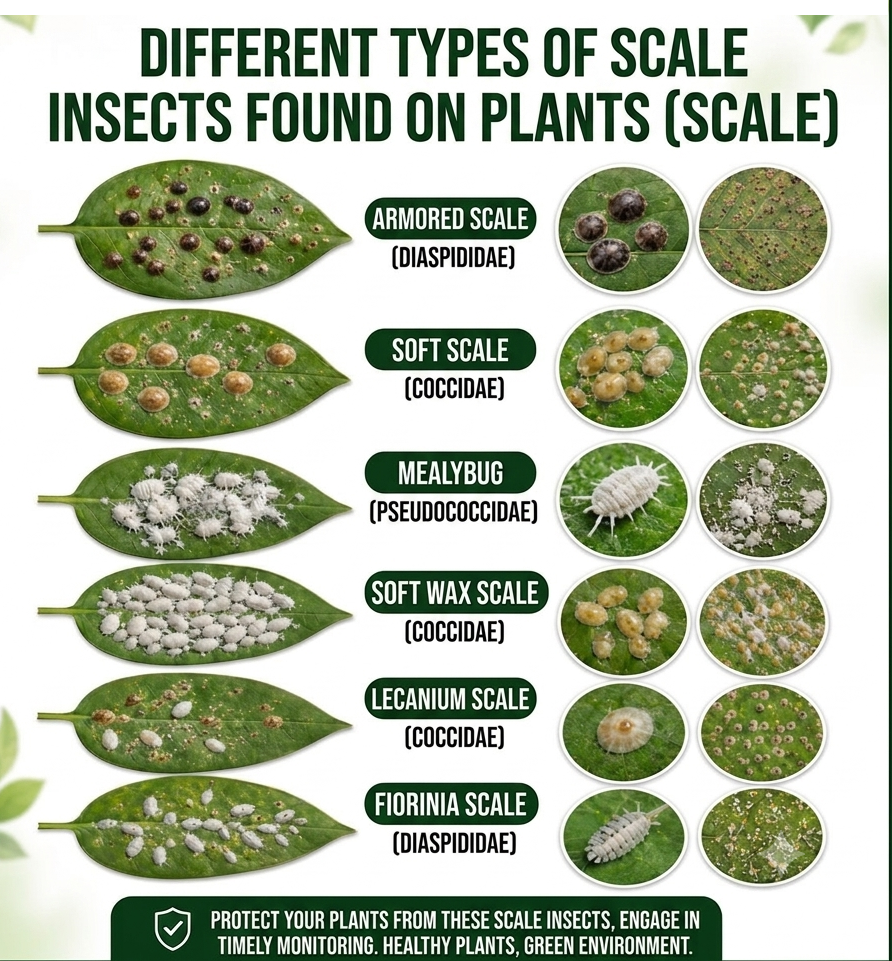
The image highlights some of the most common types of scale insects found on ornamental plants, fruit trees and houseplants.
Common Types of Scale Insects
- Armored Scale (Diaspididae)
These insects have a hard, shell-like protective covering and are among the most destructive scale pests. They feed on plant sap while remaining firmly attached to leaves and stems.
- Soft Scale (Coccidae)
Unlike armored scales, soft scales have a softer, waxy covering. They produce large amounts of honeydew, which attracts ants and encourages the growth of black sooty mold.
- Mealybugs (Pseudococcidae)
Recognized by their white cotton-like appearance, mealybugs hide in leaf joints, stems and roots. They weaken plants by sucking sap and spreading quickly under warm conditions.
- Soft Wax Scale (Coccidae)
These wax-covered insects cluster together on leaves and stems, producing sticky honeydew that attracts insects and fungal diseases.
- Lecanium Scale (Coccidae)
Lecanium scales are dome-shaped, brown to tan insects that commonly infest fruit trees, shade trees and ornamental plants.
- Fiorinia Scale (Diaspididae)
A type of armored scale frequently found on palms, citrus, ornamental shrubs and evergreens. Heavy infestations can lead to yellowing leaves and premature leaf drop.
Symptoms of Scale Insect Damage
Early detection is essential. Watch for the following warning signs:
- Yellowing or curling leaves
- Stunted growth
- Leaf drop
- Sticky honeydew on leaves and branches
- Black sooty mold developing on leaves
- White cotton-like clusters (mealybugs)
- Brown, grey or white bumps attached to stems and leaves
- Ant activity around infested plants
- Weak flowering and poor fruit production
Prevention
Preventing an infestation is much easier than eliminating one.
Inspect Plants Regularly
Check the underside of leaves, stems and new shoots every week, especially during spring and summer.
Maintain Plant Health
Healthy plants are naturally more resistant to pest attacks. Provide adequate water, balanced fertilization and sufficient sunlight.
Improve Air Circulation
Avoid overcrowding plants. Proper spacing reduces humidity and discourages pest populations.
Control Ants
Ants protect scale insects in exchange for honeydew. Eliminating ants helps natural predators attack scale populations.
Prune Infested Branches
Remove heavily infested twigs and dispose of them away from the garden.
Encourage Beneficial Insects
Ladybirds (ladybugs), lacewings and parasitic wasps are natural enemies of scale insects and help keep populations under control.
Treatment
Mechanical Control
For light infestations:
- Remove insects by hand.
- Wipe leaves with a cotton swab dipped in 70% isopropyl alcohol.
- Wash plants with a strong jet of water.
Organic Treatment
Neem Oil Spray
Mix:
- 5 ml neem oil
- 2 ml mild liquid soap
- 1 litre of water
Spray thoroughly on both sides of leaves every 7–10 days until the infestation is controlled.
Insecticidal Soap
Effective against young crawler stages before they develop protective coverings.
Horticultural Oil
Dormant or summer horticultural oils suffocate scale insects by blocking their breathing pores.
Apply during cooler parts of the day and avoid spraying during extreme heat.
Chemical Control
For severe infestations, systemic insecticides may be required.
Products containing the following active ingredients are commonly recommended:
- Imidacloprid
- Acetamiprid
- Dinotefuran
- Spirotetramat
Always follow the manufacturer’s instructions and avoid spraying flowering plants when bees are actively foraging.
Plants Commonly Attacked
Scale insects affect hundreds of plant species, including:
- Citrus
- Mango
- Guava
- Grapevines
- Hibiscus
- Roses
- Bougainvillea
- Ficus
- Indoor ornamental plants
- Palms
- Succulents
Key Gardening Tip
Scale insects are easiest to control during the crawler stage, when the young insects have not yet developed their protective waxy or hard covering. Regular monitoring and early treatment can prevent serious infestations and keep plants healthy, productive and attractive throughout the growing season.
اسکیل کیڑے (Scale Insects): پودوں کے خاموش دشمن، بروقت پہچان اور مؤثر علاج
تحریر: عاشر بٹ
پودوں کی صحت اور خوبصورتی کو متاثر کرنے والے سب سے خطرناک رس چوسنے والے کیڑوں میں اسکیل انسیکٹس (Scale Insects) نمایاں ہیں۔ یہ ننھے کیڑے پتوں، شاخوں اور تنوں سے چمٹ کر پودے کا رس چوستے رہتے ہیں، جس سے پودا آہستہ آہستہ کمزور، زرد اور بے جان ہو جاتا ہے۔ اگر بروقت ان کا تدارک نہ کیا جائے تو یہ پورے باغ یا نرسری میں تیزی سے پھیل سکتے ہیں۔
ذیل میں اسکیل کیڑوں کی عام اقسام، نقصان، بچاؤ اور علاج کے بارے میں اہم معلومات پیش کی جا رہی ہیں۔
اسکیل کیڑوں کی عام اقسام
1۔ آرمرڈ اسکیل (Armored Scale)
ان کیڑوں کے جسم پر سخت خول ہوتا ہے، جو انہیں عام اسپرے سے محفوظ رکھتا ہے۔ یہ پتوں اور شاخوں سے رس چوس کر پودے کو شدید نقصان پہنچاتے ہیں۔
2۔ سافٹ اسکیل (Soft Scale)
یہ نرم اور مومی جسم رکھتے ہیں اور بڑی مقدار میں شہد نما چپچپا مادہ (Honeydew) خارج کرتے ہیں، جس سے پتوں پر سیاہ پھپھوندی (Sooty Mold) پیدا ہو جاتی ہے۔
3۔ میلی بگ (Mealybug)
یہ سفید روئی جیسے نظر آنے والے کیڑے ہوتے ہیں جو پتوں کی بغل، نئی شاخوں اور جڑوں پر حملہ کرتے ہیں۔
4۔ سافٹ ویکس اسکیل (Soft Wax Scale)
یہ مومی تہہ والے کیڑے ہیں جو جھنڈ کی صورت میں پودے پر حملہ کرتے ہیں اور شہد نما مادہ خارج کرتے ہیں۔
5۔ لیکینیم اسکیل (Lecanium Scale)
یہ بھورے یا ہلکے بھورے رنگ کے گول ابھار کی شکل میں نظر آتے ہیں اور پھلدار اور سجاوٹی پودوں کو متاثر کرتے ہیں۔
6۔ فیورینیا اسکیل (Fiorinia Scale)
یہ خاص طور پر کھجور، سدا بہار پودوں، سٹرس اور دیگر آرائشی پودوں پر حملہ کرتے ہیں۔
اسکیل کیڑوں کی علامات
اگر درج ذیل علامات نظر آئیں تو فوراً پودے کا معائنہ کریں۔
-
پتے زرد یا مڑے ہوئے ہونا
-
پودے کی بڑھوتری رک جانا
-
پتے جھڑنا
-
پتوں پر چپچپا مادہ آنا
-
پتوں پر سیاہ پھپھوندی لگ جانا
-
سفید روئی نما کیڑوں کا نظر آنا
-
پتوں اور شاخوں پر بھورے یا سفید ابھار
-
چیونٹیوں کی غیر معمولی آمدورفت
-
پھول اور پھل کم لگنا
بچاؤ کیسے کریں؟
باقاعدگی سے معائنہ کریں
ہر ہفتے پتوں کی اوپری اور نچلی سطح، نئی شاخوں اور تنوں کا اچھی طرح جائزہ لیں۔
پودوں کو صحت مند رکھیں
متوازن کھاد، مناسب پانی اور مکمل دھوپ پودوں کو مضبوط بناتی ہے، جس سے ان پر کیڑوں کا حملہ کم ہوتا ہے۔
ہوا کی بہتر آمدورفت
پودوں کو بہت زیادہ قریب قریب نہ لگائیں تاکہ ہوا آسانی سے گزر سکے۔
چیونٹیوں پر قابو پائیں
چیونٹیاں اسکیل کیڑوں کی حفاظت کرتی ہیں، اس لیے ان کا خاتمہ بھی ضروری ہے۔
متاثرہ شاخیں کاٹ دیں
زیادہ متاثرہ شاخوں کو فوراً کاٹ کر باغ سے باہر تلف کر دیں۔
قدرتی شکاری کیڑوں کی حفاظت کریں
لیڈی برڈ (Ladybird)، لیس ونگ (Lacewing) اور مفید بھڑیں (Parasitic Wasps) اسکیل کیڑوں کو قدرتی طور پر ختم کرتی ہیں۔
علاج
1۔ ہاتھ سے صفائی
اگر حملہ کم ہو تو
-
روئی کو 70 فیصد آئسو پروپل الکحل میں بھگو کر کیڑے صاف کریں۔
-
تیز پانی کے پریشر سے پودے دھوئیں۔
-
متاثرہ حصے صاف کر دیں۔
2۔ نیم آئل اسپرے
ایک لیٹر پانی میں
-
5 ملی لیٹر نیم آئل
-
2 ملی لیٹر ہلکا مائع صابن
ملا کر اچھی طرح اسپرے کریں۔
ہر 7 سے 10 دن بعد دوبارہ اسپرے کریں۔
3۔ انسیکٹی سائیڈل صابن
یہ خاص طور پر اس وقت مؤثر ہوتا ہے جب کیڑے ابتدائی Crawler Stage میں ہوں۔
4۔ ہارٹیکلچرل آئل
ہارٹیکلچرل آئل کیڑوں کے سانس لینے کے سوراخ بند کرکے انہیں ختم کرتا ہے۔
صبح یا شام کے وقت اسپرے کریں اور شدید گرمی میں استعمال نہ کریں۔
5۔ کیمیائی علاج
شدید حملے کی صورت میں درج ذیل مؤثر ادویات استعمال کی جا سکتی ہیں۔
-
امیڈاکلوپرڈ (Imidacloprid)
-
ایسیٹامیپرڈ (Acetamiprid)
-
ڈائنوٹیفیوران (Dinotefuran)
-
اسپائروٹیٹرامیٹ (Spirotetramat)
استعمال سے پہلے لیبل پر درج ہدایات پر ضرور عمل کریں۔
کن پودوں پر زیادہ حملہ ہوتا ہے؟
یہ کیڑے عام طور پر درج ذیل پودوں کو متاثر کرتے ہیں۔
-
انگور
-
مالٹا، کینو، لیموں
-
آم
-
امرود
-
گلاب
-
گڑھل (ہبسکس)
-
بوگن ویلیا
-
فکس
-
کھجور
-
گھریلو آرائشی پودے
-
ساکولینٹس




