When Pakistan’s flag was misrepresented, why did no one demand accountability?
Asher Butt
A national flag is not merely a piece of cloth stitched together in green and white. It is the identity of a nation, the symbol of its sovereignty, the embodiment of its dignity, and the legacy of those who sacrificed their lives to keep it flying.
Across Pakistan’s borders, soldiers willingly stand in the line of fire to ensure that this flag never bows. Many have embraced martyrdom protecting the honour it represents. They understand that safeguarding the national flag is, in essence, safeguarding the honour of an entire nation.
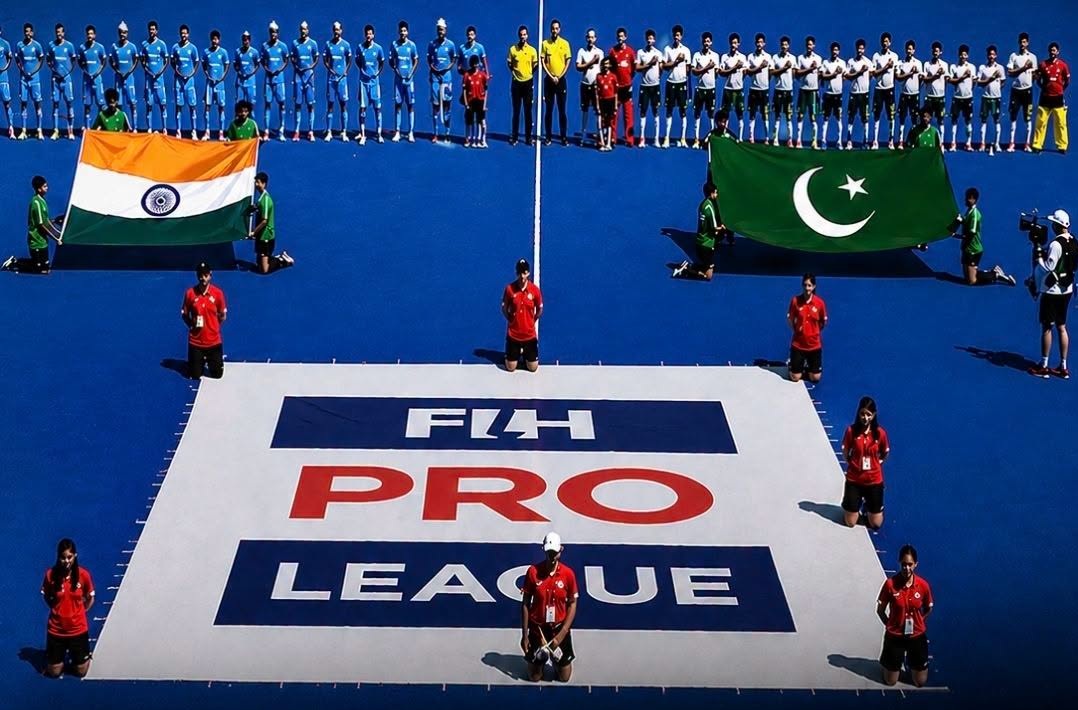
Yet during Pakistan’s FIH Pro League match against arch-rivals India in England, the country’s flag was displayed incorrectly before a global audience.
Whether it was an unfortunate oversight or something more serious remains unknown. What is beyond dispute, however, is that the mistake occurred during one of Pakistan’s most watched international hockey fixtures.
The International Hockey Federation (FIH) acknowledged the error, issued an apology, and sent an official letter accepting responsibility. From an organisational standpoint, it fulfilled its obligation.
But did Pakistan fulfil its own?
That is the question that remains unanswered.
Was the team management asked how such an obvious mistake escaped everyone’s attention? Did any official raise an immediate objection before the match began? Was anyone held accountable for failing to notice that Pakistan’s national flag had been incorrectly displayed on one of hockey’s biggest stages?
So far, the response has been deafening silence.
The issue extends far beyond a simple protocol error.
A national flag carries emotional value that cannot be measured in administrative terms. It represents the sacrifices of generations, the courage of armed forces defending the country’s frontiers, the mothers who bury sons draped in that very flag, and the children who grow up believing it deserves the highest respect wherever it is displayed.
When that symbol is incorrectly represented on an international stage, particularly during a match involving Pakistan and India, it deserves immediate attention—not indifference.
What makes the silence even more difficult to understand is Pakistan’s recent experience with another hockey-related controversy.
Not long ago, an AI-generated image falsely depicting Pakistan’s hockey team sitting on a roadside pavement in Australia spread rapidly across social media. The fabricated image was amplified by Indian media, with Hindustan Times prominently publishing it. The controversy snowballed into a damaging narrative that affected Pakistan hockey’s image for months.
That incident generated headlines, statements, public outrage and widespread debate.
This one has not.
Why?
If an artificial image was considered significant enough to provoke international discussion, why has the incorrect display of Pakistan’s national flag received little more than a passing acknowledgement?
National dignity cannot become a selective concern.
Patriotism cannot be activated only when a story dominates social media or creates political mileage. Respect for national symbols demands consistency.
This is not about assigning blame for the sake of criticism. It is about establishing responsibility.
International sporting events operate under strict ceremonial protocols. Team officials are expected to verify player lists, uniforms, accreditation details and national symbols. These are not minor formalities—they are integral parts of representing a sovereign nation.
Mistakes happen. What defines professional institutions is how they respond to those mistakes.
A simple internal inquiry, an explanation from the management, or a commitment to strengthen future protocols would have demonstrated that Pakistan treats its national identity with the seriousness it deserves.
Instead, silence has created an uncomfortable impression that no one considered the matter important enough to pursue.
Pakistan hockey has endured enough challenges in recent decades—declining standards, administrative instability, financial crises and shrinking international influence. At a time when the sport is desperately trying to rebuild its image, every detail matters.
The national flag is not a ceremonial accessory.
It is the country’s identity carried into every international arena.
If we expect the world to respect Pakistan’s symbols, we must first demonstrate that we respect them ourselves.
The FIH admitted its mistake.
The more pressing question now is whether Pakistan’s own sporting authorities will acknowledge theirs—or whether silence has become the new standard of accountability.