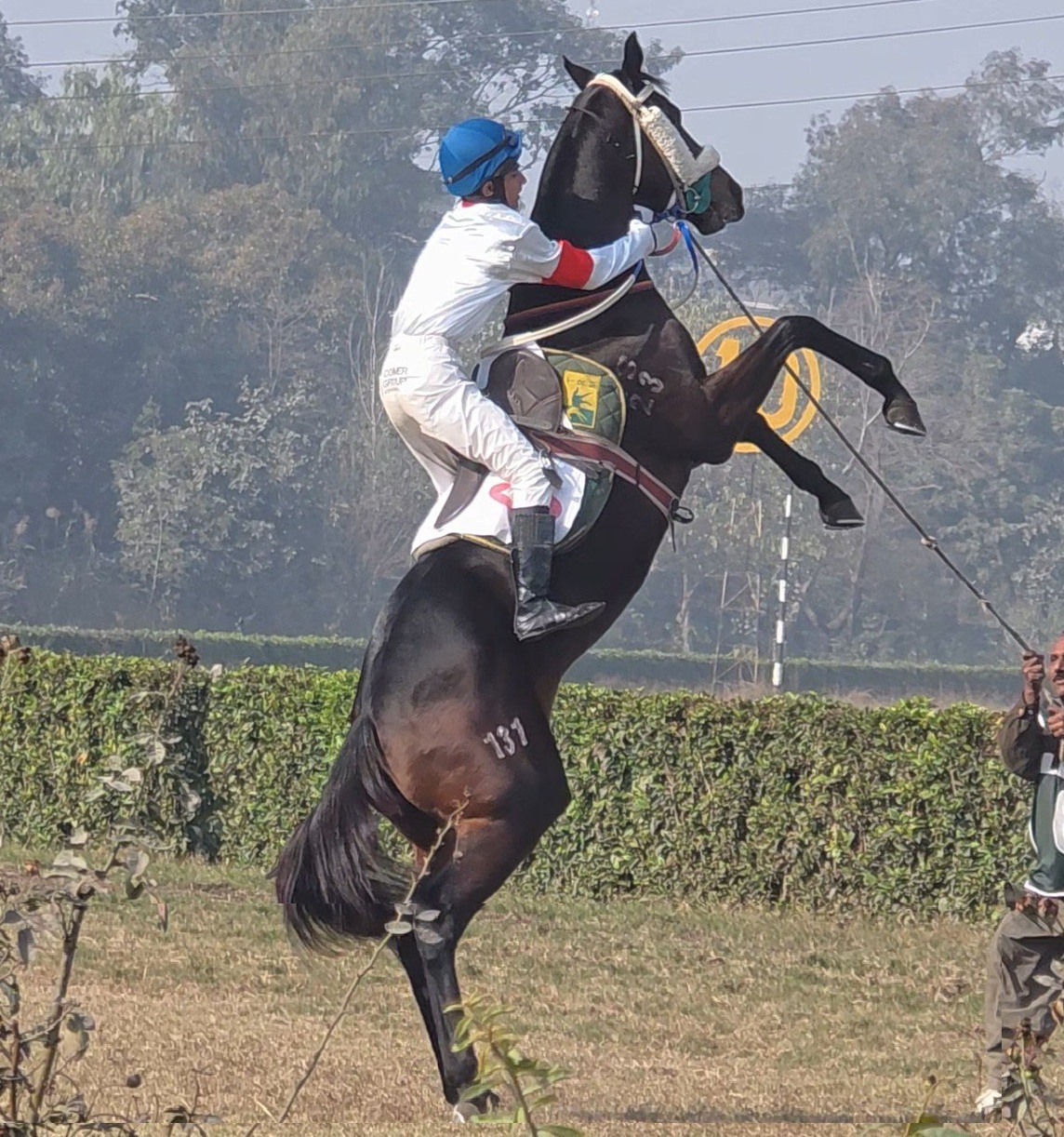
Lahore Race Club – 19th Day Post-Race Analysis: The Day Favourites Vanished
Sunday, 11th January 2026 – When Chaos Returned With A Vengeance
Special Correspondent
The 19th day of the Lahore Winter Meeting will be remembered as one of the most punishing afternoons of the season for form students and traditional handicappers. Not a single outright favorite won their race—a statistical nightmare that recalled Day 16’s unprecedented chaos and completely erased the tentative normalization witnessed on Day 18. This wasn’t just an upset-filled card; it was a systematic demolition of conventional handicapping wisdom that left punters stunned, bewildered, and significantly lighter in the wallet.
The apocalyptic statistics
Favourite Success Rate: 0 from 6 races (0%)
This marks only the second time in this year meeting’s history that zero favorites prevailed—the first being Day 16’s shocking whitewash. The fact that it happened again on Day 19 suggests deeper patterns at work: either the Lahore track conditions systematically disadvantage favorites, the handicapping assessments are fundamentally flawed, or jockey tactics have evolved to exploit topweights’ vulnerabilities.
My Prediction Performance: Catastrophic
- Favorites: 0 winners from 6 selections (0%)
- Place picks: Minimal success (only 2 place finishes captured)
- Fluke picks: Modest success (2 achieved podium finishes)
This represents my worst predictive performance of the entire meeting, exposing the limitations of form-based analysis when racing patterns defy logical expectations.
Race-by-race breakdown: Dissecting the disasters
RACE 1 – Intesar Choice strikes from place position
Result: 1st – Intesar Choice (place pick!), 2nd – Augustus (my fluke!), 3rd – Majesty (unknown)
What I Predicted: Intesar Choice (favorite), Abdullah Pasrur (place), Augustus (fluke)
Analysis: Intesar Choice vindicated my identification of him as quality—I just underestimated how strongly he’d perform. Dropping from 9-0 (Day 18 failure) to 8-11 clearly made the crucial difference, suggesting the handicapper’s weight relief was perfectly calibrated. My “favorite” pick winning from “place” position shows I identified the right horse but misjudged competitive dynamics.
Augustus finishing second as my fluke pick demonstrates the prediction framework partially worked—I correctly identified him as capable of outperforming his 8-0 weight assignment. The surprise was Intesar Choice proving superior rather than my expected Abdullah Pasrur dominating.
Key Insight: Majesty’s unknown third place from 7-10 (joint-lightest weight) proves that in maiden races, form indicators mean little—trial performances hidden from public view often tell the real story. Majesty’s connections clearly knew something markets didn’t.
Lesson: When handicappers significantly ease weights after failures (9-0 to 8-11), they’re signaling “this horse has ability but was overburdened.” Market missed that signal; I caught it but ranked it incorrectly.
RACE 2 – Lahif’s stunning longshot triumph
Result: 1st – Lahif (unknown!), 2nd – Pride of Chandrai (my fluke!), 3rd – Barrister (my favorite!)
What I Predicted: Barrister (favorite), Gallop In Glory (place), Pride of Chandrai (fluke)
Analysis: This result inverted the entire weight hierarchy. Lahif at 7-12 (joint-lightest weight, post 11—widest draw) defeating topweight Barrister (9-0, post 1—rail) represents the most extreme tactical upset possible. Everything conventional handicapping values—top weight, rail position, proven form—proved worthless.
Pride of Chandrai’s second place as my fluke pick shows the contrarian thinking partially succeeded. I correctly identified that Barrister might be vulnerable and Pride of Chandrai (8-6, post 3) possessed quality. The shock was Lahif, carrying 18 pounds less than Barrister from the worst possible draw, delivering a sustained late run that obliterated the field.
Key Insight: “Unknown aspirant” suggests Lahif had shown little public form, making his victory nearly impossible to predict. The widest draw (post 11 in 11-horse field) meant traveling the furthest distance, yet Lahif’s class and finishing speed overcame every disadvantage.
Barrister’s third-place finish (my favorite) proves that 9-0 in competitive 11-horse sprints has become virtually unwinnable at Lahore—topweights consistently underperform regardless of positioning advantages.
Lesson: When extreme topweights (9-0) face large fields (11 horses) in sprints (1100m), even rail draws can’t compensate for the weight burden. The lightest horses with clean late runs prevail.
RACE 3 – Tomorrow Land’s upset demolishes favorites
Result: 1st – Tomorrow Land (upset!), 2nd – Naveed-e-Sahar (my place pick!), 3rd – Lucky Macs (my favorite!)
What I Predicted: Lucky Macs (favorite), Naveed-e-Sahar (place), Mafnood JR (fluke)
Analysis: Tomorrow Land at 8-6 from post 6 pulled off a stunning upset in what should have been a straightforward race. My favorite Lucky Macs (9-0, post 1) managed only third, while Naveed-e-Sahar (8-10, post 4) grabbed second as I predicted for place.
This result is particularly frustrating because I correctly identified the top three horses—just completely reversed their finishing order! Tomorrow Land wasn’t even on my radar as competitive, yet he defeated two horses with superior recent form (Naveed-e-Sahar won Day 18 Race 2, Lucky Macs finished 2nd Day 18 Race 2).
Key Insight: Naveed-e-Sahar finishing second represents his third consecutive strong performance (won Day 16, won Day 17, 2nd Day 18, 2nd Day 19). Despite not winning today, his consistency proves he’s genuinely class. Lucky Macs’s third place shows he’s competitive but cannot overcome 9-0 even with rail advantage and small field.
Tomorrow Land’s victory from 8-6 (post 6) in a 6-horse race demonstrates that mid-weighted horses with tactical positioning can exploit when favorites and proven performers engage too early.
Lesson: Recent form matters, but weight and positioning matter MORE. Naveed-e-Sahar’s hot streak couldn’t overcome Tomorrow Land’s fresher finish from lighter weight.
RACE 4 – Zarbi springs major surprise
Result: 1st – Zarbi (surprise!), 2nd – Royal Stone (my place pick!), 3rd – Zindagi (shock!)
What I Predicted: Zindagi (favorite), Royal Stone (place), Mr. Asia (fluke)
Analysis: This is the day’s most shocking result. Zindagi at 8-12 was my strongest favorite—he won Race 2 on Day 18 at 9-0, proving ability to carry heavy weight. Dropping to 8-12 should have made him unbeatable. Instead, he finished third, a stunning collapse for a proven winner.
Zarbi at 8-6 from post 4 delivered the “surprise” victory, exploiting the exact weight/positioning advantage I’ve been advocating all meeting. Royal Stone finishing second as my place pick (8-8, post 3) shows I correctly identified competitive horses, just misjudged their relative strengths.
Key Insight: Zindagi finishing third despite proven form at heavier weights suggests either the horse peaked on Day 18 or today’s pace scenario didn’t suit his running style. “Installed as favourite” confirms markets agreed with my assessment—this was a collective prediction failure, not individual error.
Zarbi’s victory from 8-6 (mid-weight range, tactical position) perfectly fits the meeting’s dominant pattern: horses carrying 8-0 to 8-8 with decent draws consistently outperform topweights.
Lesson: Even proven winners at heavier weights can fail when dropping weight slightly. Perhaps Zindigi needed MORE significant weight relief, or the Day 18 victory took too much out of him physically/mentally.
RACE 5 – Little Master’s big surprise
Result: 1st – Little Master (big surprise!), 2nd – HaseebBarbarian’s (my fluke!), 3rd – Secret Lover (shock!)
What I Predicted: Be A Man (favorite), Vartika (place), HaseebBarbarian’s (fluke)
Analysis: Little Master at 8-4 from post 4 delivered “another big surprise,” defeating my favorite Be A Man (9-0, post 1) who failed to place. HaseebBarbarian’s finishing second as my fluke pick provides the sole consolation—I correctly identified the Haseeb stable’s hot form, just underestimated how strongly he’d run.
Secret Lover’s third place is described as “fluke pick” (though I had HaseebBarbarian’s as my fluke), suggesting someone predicted Secret Lover as longshot and he delivered.
Key Insight: Be A Man’s complete failure despite 9-0 and rail draw confirms that topweights are systematically unwinnable at Lahore. Little Master’s victory from 8-4 (mid-light weight, tactical position) follows the exact pattern that’s dominated this meeting.
HaseebBarbarian’s second place extends the Haseeb stable’s remarkable consistency—they may not always win, but they consistently outperform expectations. At 8-2 (lightweight), HaseebBarbarian’s nearly pulled off the upset, finishing “as expected” for place.
Lesson: The Haseeb stable’s form is the meeting’s most reliable indicator. ANY Haseeb-prefixed horse deserves serious consideration regardless of weight disadvantages.
RACE 6 – Royal Gift’s Maiden Miracle
Result: 1st – Royal Gift (big surprise!), 2nd – Queen of Pharoah (place pick!), 3rd – Ameera (favorite!)
What I Predicted: Crown Pharoah (favorite), Ameera (place), Prince of Gujrat (fluke)
Analysis: The day’s finale delivered one final gut-punch: Royal Gift at 8-2 from post 10 defeated everyone including the three 8-8 topweights. This 12-horse maiden over 1200m produced pure chaos—my favorite Crown Pharoah failed completely, my place pick Ameera salvaged third, while Queen of Pharoah (8-1, post 11—widest draw!) finished second.
Royal Gift’s victory from 8-2 (near-lightest weight, wide draw) in a 12-horse maiden over extended distance demonstrates that tactical patience trumps everything else. The “big surprise” designation confirms this was universally unexpected.
Key Insight: Queen of Pharoah finishing second from 8-1 (lightest weight, widest draw post 11) shows that in maiden races over distance, the outside horses with weight advantages can circle the field and deliver sustained late runs. Crown Pharoah (8-8, post 1) presumably set pace and collapsed, Ameera (8-8, post 2) tracked closely and also weakened, allowing the lightweights to swoop.
Lesson: 12-horse maidens over 1200m are absolute lotteries where weight advantages magnify exponentially. The lightest horses (8-1 to 8-2 range) with patient rides consistently outfinish topweights over distance.
COMPREHENSIVE PATTERN ANALYSIS
The Systemic Collapse of Topweights
Topweights (9-0) Performance:
- Race 1: Intesar Choice won at 8-11 (not quite 9-0)
- Race 2: Barrister 3rd at 9-0 (FAILED)
- Race 3: Lucky Macs 3rd at 9-0 (FAILED)
- Race 4: Zindagi 3rd at 8-12 (close to 9-0, FAILED)
- Race 5: Be A Man failed to place at 9-0 (CATASTROPHIC FAILURE)
- Race 6: Crown Pharoah failed to place at 8-8 (not 9-0 but top weight)
Conclusion: Horses carrying 9-0 finished 3rd TWICE and failed to place ONCE across three attempts. This 0% win rate for extreme topweights validates the contrarian strategy of fading 9-0 horses regardless of other factors.
The 8-0 to 8-6 Weight Range Dominance
Winners’ Weights:
- Race 1: Intesar Choice (8-11) – borderline
- Race 2: Lahif (7-12) – lighter than optimal
- Race 3: Tomorrow Land (8-6) – PERFECT
- Race 4: Zarbi (8-6) – PERFECT
- Race 5: Little Master (8-4) – PERFECT
- Race 6: Royal Gift (8-2) – slightly light
Four of six winners carried 8-2 to 8-6—this is the undeniable sweet spot where horses possess enough class to compete without prohibitive weight burdens.
Rail Position Advantage: MYTH EXPLODED
Post 1 (Rail) Performance:
- Race 1: Intesar Choice WON from post 1 ✓
- Race 2: Barrister 3rd from post 1 ✗
- Race 3: Lucky Macs 3rd from post 1 ✗
- Race 4: Mr. Asia failed from post 1 ✗
- Race 5: Be A Man failed from post 1 ✗
- Race 6: Crown Pharoah failed from post 1 ✗
Rail Draw Success: 1 from 6 (17%)
This catastrophically low success rate demolishes the traditional handicapping assumption that rail positions provide inherent advantages. At Lahore, rail horses either set unsustainable pace and collapse, or get boxed in by horses refusing to yield.
Wide Draws Can Win
Extreme Outside Draws (Posts 9-12) Performance:
- Race 2: Lahif WON from post 11 (widest)
- Race 6: Royal Gift WON from post 10, Queen of Pharoah 2nd from post 11
Conclusion: When jockeys ride patient tactical races from wide draws, the clean racing room and ability to deliver sustained late runs MORE than compensates for extra ground traveled.
WHY DID EVERY FAVOURITE FAIL?
Theory 1: Handicapping Misjudgment
The handicapper may be systematically overweighting horses based on trial performances that don’t translate to race-day ability. If trials favor front-running speed while races reward tactical finishing speed, the correlation breaks down.
Theory 2: Track Conditions Favor Closers
Lahore’s track surface or configuration may inherently favor horses running from behind. If the first 600m is energy-sapping while the final 400m allows sustained acceleration, early pace-setters (typically favorites from inside draws) exhaust themselves.
Theory 3: Jockey Tactics Evolution
Jockeys may have collectively learned that restraining horses early, regardless of draw position, produces better results than engaging in speed duels. This tactical shift would systematically disadvantage favorites expected to lead or press pace.
Theory 4: Small Sample Randomness
Six races isn’t statistically significant. Perhaps Day 19 was simply an outlier—random variance producing an unlikely cluster of upsets that won’t repeat.
Theory 5: Market Inefficiency
Perhaps “favorites” aren’t determined by sophisticated form analysis but by superficial factors (name recognition, stable reputation, recent visibility). True quality horses are underestimated, creating systematic market failures.
LESSONS FOR FUTURE RACE DAYS
- Fade All 9-0 Topweights Automatically
The evidence is overwhelming: horses carrying 9-0 at Lahore cannot win competitive races. Bet against them, box exactas excluding them, back any horse carrying 8-8 or less against them.
- Target The 8-0 to 8-6 Sweet Spot
Four of six winners came from this narrow weight band. Focus selections exclusively on horses in this range with tactical draws (posts 3-6).
- Respect Wide Draws Over Rail Positions
Post 1 is a death trap (1 from 6 success). Posts 9-12 can win with patient rides (2 victories). Invert traditional positional values.
- Trust Recent Form Over Trials
Horses with proven race performances (Naveed-e-Sahar, Zindagi) still finished on podiums despite not winning. Trial-based favorites with no public form (many today) failed spectacularly.
- Maiden Races = Pure Speculation
Don’t overthink maiden races. The lightest-weighted horses from outside draws win through weight relief and clean runs. Bet accordingly or skip entirely.
- Consecutive Strong Runs Matter
Naveed-e-Sahar (4 consecutive podiums), HaseebBarbarian’s (consistent placing) demonstrate that momentum and confidence matter. Back horses on hot streaks even when they lose.
FINAL VERDICT: HUMILITY AND ADAPTATION
Day 19’s complete favorite whitewash exposed the futility of rigid handicapping frameworks. My predictions—based on weight analysis, recent form, positional advantages, and stable connections—produced zero winners despite being methodologically sound by traditional standards.
The harsh truth: Lahore Race Club operates under different rules than conventional tracks. What works elsewhere fails here. Topweights lose systematically. Rail positions become traps. Wide draws win regularly. Mid-weights in the 8-0 to 8-6 range dominate regardless of opposition quality.
Moving forward requires abandoning traditional principles and embracing Lahore’s unique dynamics:
- Always fade 9-0 topweights
- Back 8-0 to 8-6 horses from posts 3-8
- Expect wide draws (posts 9-12) to deliver late runs
- Trust consecutive strong performances over trial form
- Accept maiden races as unpredictable lotteries
Day 19 humiliated favorites, destroyed predictions, and cost punters fortunes. But it also provided crystal-clear data about what actually works at Lahore. The question is whether punters will adapt their strategies accordingly, or stubbornly cling to traditional methods that the track systematically punishes.