Asher Butt
Selective pruning is one of the most effective techniques to boost plant health, increase yields, and keep your garden thriving. By strategically trimming specific parts of your plants, you can ensure they direct their energy toward producing high-quality fruits and vegetables rather than maintaining excess foliage.
Why is selective pruning important?
- Improves Air Circulation: Trimming dense foliage allows better airflow through the plant canopy, reducing humidity build-up and the risk of fungal diseases.
- Maximizes Yield & Quality: Directs vital nutrients and energy away from unnecessary growth toward flower and fruit development.
- Maintains Plant Health: Removing damaged or dead material stops the spread of pests and diseases early on.
Pro-Tip: Focus only on removing dry, diseased, overlapping, or unnecessary branches and leaves. Avoid over-pruning, as cutting away too much foliage can stunt plant growth, stress the plant, and significantly reduce your harvest.
Crop-Specific Pruning Techniques
Different garden crops require distinct pruning methods to achieve optimal growth:
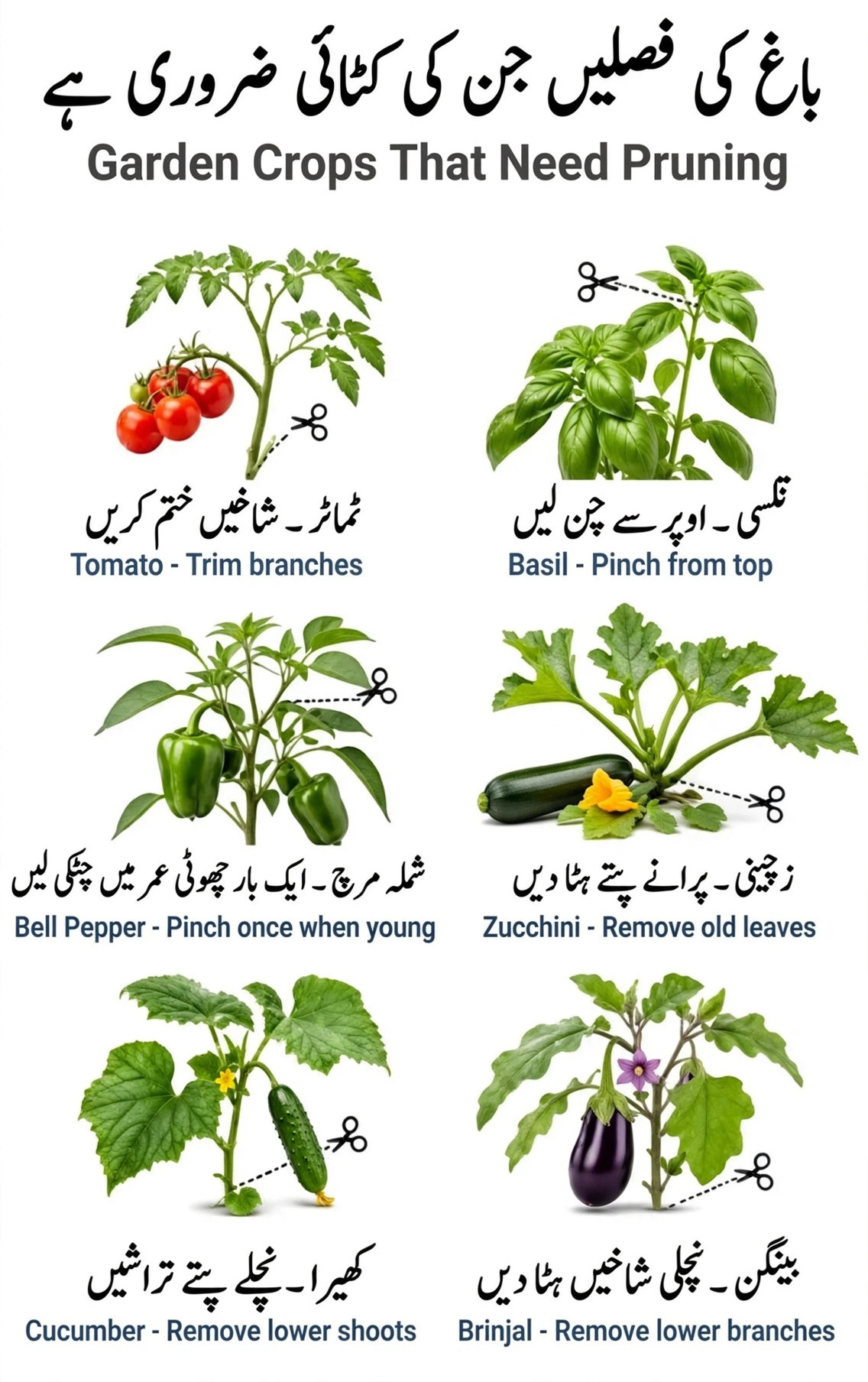
- Tomatoes
- Technique: Trim non-essential branches and suckers growing in the branch crotches.
- Goal: Channels energy into larger, healthier tomato yields and prevents the plant from becoming overgrown and overcrowded.
- Basil
- Technique: Pinch off the top center growing tip regularly.
- Goal: Encourages the herb to grow bushier and delays flowering, prolonging fresh leaf production.
- Bell Peppers
- Technique: Pinch back the top growing tip once while the plant is young.
- Goal: Stimulates early branching, resulting in a sturdier structure capable of supporting more peppers.
- Zucchini
- Technique: Remove old, yellowing, or low-lying leaves.
- Goal: Prevents ground-borne fungal spores from spreading to the main plant and improves sunlight exposure to developing squash.
- Cucumbers
- Technique: Prune the lower shoots and leaves near the base.
- Goal: Keeps foliage off the soil to reduce disease exposure and promotes vertical growth on trellises.
- Brinjal (Eggplant)
- Technique: Remove lower branches and excess suckers near the soil level.
- Goal: Improves airflow around the base and focuses energy on larger fruit development.
Key Takeaways
- Be Selective: Only remove weak, dead, or crowded stems.
- Use Clean Tools: Always sterilize your shears between plants to avoid spreading pathogens.
- Don’t Overdo It: Leave enough healthy foliage so the plant can continue to photosynthesize effectively.
باغی فصلوں کی منتخب شاخ تراشی کا آسان گائیڈ
باغی فصلوں میں منتخب شاخ تراشی (Selective Pruning) پودوں کو صحت مند رکھنے، ہوا کی بہتر آمدورفت برقرار رکھنے اور توانائی کو زیادہ پھل یا سبزی پیدا کرنے پر مرکوز کرنے میں مدد دیتی ہے۔
اہم احتیاط
صرف خشک، بیمار، ایک دوسرے پر چڑھی ہوئی یا غیر ضروری شاخیں اور پتے ہٹائیں۔ تاہم ضرورت سے زیادہ شاخ تراشی سے گریز کریں، کیونکہ اس سے پودے کی نشوونما متاثر ہو سکتی ہے اور پیداوار بھی کم ہو سکتی ہے۔
مختلف فصلوں کی کٹائی کے اہم طریقے
-
ٹماٹر (): شاخیں اور غیر ضروری شگوفتے ختم کریں تاکہ پودے کی طاقت بڑے اور صحت مند ٹماٹر بنانے میں استعمال ہو۔
-
تلسی (): اوپر سے چن لیں (اوپری حصے کی چٹکی لیں) تاکہ پودا پھیل کر گھنا ہو اور زیادہ پتے دے۔
-
شملہ مرچ (): پودا جب چھوٹا ہو تو ایک بار چھوٹی عمر میں چٹکی لیں۔ اس سے شاخیں مضبوط ہوتی ہیں۔
-
زچینی (): نیچے موجود پرانے اور پیلے پتے ہٹا دیں تاکہ بیماریاں نہ پھیلیں اور روشنی پودے تک پہنچے۔
-
کھیرا (): نچلے پتے اور شگوفتے تراشیں تاکہ پودا اوپر کی طرف اچھے طریقے سے پھیلے۔
-
بینگن (): زمین کے قریب نچلی شاخیں ہٹا دیں تاکہ ہوا کی آمدورفت بہتر ہو اور پھل بڑا ہو۔
شاخ تراشی کے بنیادی فوائد
-
بہتر ہوا اور روشنی: پودے کے اندر تک دھوپ اور ہوا پہنچتی ہے جس سے فنگس اور بیماریوں کا خطرہ کم ہوتا ہے۔
-
بیماریوں سے بچاؤ: خراب یا زمین سے لگنے والے پتے کاٹنے سے بیماریاں دوسرے حصوں تک نہیں پھیلتیں۔
-
بہترین پیداوار: پودا اپنی تمام تر توانائی بلاوجہ کے پتوں کے بجائے پھل اور سبزی بنانے میں لگاتا ہے۔