
The great farce: Rewarding failure while pretending it’s progress
Asher Butt
Let’s cut through the PCB’s carefully crafted press releases of team and team management announcement and get to the truth: another World Cup, another failure, and what do we get? Not accountability. Not consequences. Not change. We get a glowing vote of confidence for the very people who just led us to one of our most embarrassing tournament exits in recent memory.
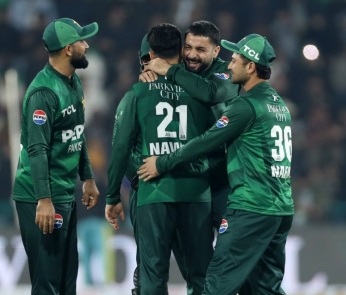
The Pakistan Cricket Board has officially decided that Salman Ali Agha should continue as T20 captain. Mike Hesson keeps his job as white-ball head coach. Aqib Javed remains Director of the High Performance Centre and a selector. Five high-profile players have been dropped — Babar Azam, Naseem Shah, Shadab Khan, Saim Ayub, Mohammad Nawaz — but the leadership that presided over this disaster? Untouchable.
This isn’t stability. This is insanity dressed as strategy.
Let me ask you a simple question: What exactly has this leadership achieved that deserves an extension?
Salman Ali Agha scored 60 runs in 6 innings during the World Cup . SIXTY. That’s less than some players score in a single innings. His captaincy was so uninspiring that a journalist felt compelled to ask him directly: “Will you leave captaincy yourself or will the board remove you?” . His response—”I’ll go back, take a few days, and then decide”—was hardly a ringing endorsement of his own leadership . Yet the PCB, in its infinite wisdom, has decided he’s the man to lead us forward.
Mike Hesson’s tactical genius gave us four spinners against India. The genius forgot they too are an Asian condition god. His brilliant planning had us playing catch-up throughout the tournament. His “transformation” of the team produced a campaign where we nearly lost to the Netherlands, got hammered by India, scraped past the USA and Namibia, lost to England, and won a dead rubber against Sri Lanka. This is what “stability” looks like? This is what the PCB wants to preserve?
Aqib Javed remains in his dual role as High Performance Director and selector—the same Aqib Javed who reportedly clashed with Aleem Dar over selections, who backed the inclusion of underperforming players, who now gets to continue shaping Pakistan cricket’s future despite overseeing yet another failed campaign .
In the Selection Committee Circus; Aleem Dar resigned. Let that sink in. One of cricket’s most respected umpires, a man who officiated in 435 international matches including four World Cup finals, walked away from the selection committee after just five months. Why? Because he reportedly felt marginalized during meetings. Because he disagreed with the inclusion of Babar Azam and Shadab Khan in the World Cup squad. Because he advocated for Mohammad Rizwan and found no support.
Instead of asking why a man of Dar’s stature felt compelled to quit, instead of examining the toxic dynamics that drove him out, the PCB did what it always does—it moved quickly to fill the vacancy. Enter Misbah-ul-Haq and Sarfaraz Ahmed.
Two former captains join the selection committee. On paper, it looks like experience. In reality, it’s the same faces recycled through the same system, ensuring the same outcomes. Misbah has already served as head coach and chief selector. Sarfaraz has been mentoring the Shaheens. This isn’t fresh thinking—it’s the PCB’s version of innovation: digging up the same fossils and pretending they’re new fossils.
Meanwhile, the captain who couldn’t buy a run and the coach whose strategies bordered on self-sabotage keep their jobs. The message couldn’t be clearer: in Pakistan cricket, failure is job security.
There is a Convenient Scapegoats; ah, but the PCB has given us blood—just not the blood that matters. Five players have been dropped. Babar Azam, despite his ODI pedigree, managed only 91 runs in the World Cup and was eventually dropped from the playing XI against Sri Lanka. Naseem Shah, Shadab Khan, Saim Ayub, Mohammad Nawaz—all shown the door.
The optics are perfect. The PCB can point to these decisions and say, “Look, we’re being tough. We’re making changes.” Never mind that these are the easy changes. Dropping players is simple. Dropping players deflects attention from the real questions:
Who selected this squad? Aqib Javed and Mike Hesson, both still in their jobs.
Who formulated the playing XI that played four spinners against India? The same people, still employed.
Who decided Fakhar Zaman should bat at number five instead of opening? The same leadership, still in charge.
Who presided over a campaign where we needed other results to qualify? The captain and coach, both retained.
The players become scapegoats while the architects of failure remain comfortably in their positions. It’s a masterclass in bureaucratic survival—sacrifice the foot soldiers, protect the generals, and hope nobody notices the pattern.
Remember Pakistan’s appearance in four tournaments, with four failures; Let’s put this in perspective. Pakistan has now failed to qualify for the semifinals in four consecutive ICC tournaments:
2023 ODI World Cup: Failed
2024 T20 World Cup: Failed
2025 Champions Trophy: Failed
2026 T20 World Cup: Failed
Four tournaments. Four failures. Different captains, different coaches, different selectors, different PCB chairmen—same result. The only constant is the system itself, and that system remains untouched.
Shoaib Akhtar put it bluntly: “If he cannot build a strong management structure, and the team has failed to qualify in four consecutive tournaments, then something is seriously wrong within the board.” He questioned whether PCB chairman Mohsin Naqvi has the right people advising him. “The people advising you are making you look bad. The selection committee is not doing you justice.”
But instead of examining the advisory structure, instead of questioning why the same mistakes keep happening, the PCB doubles down. Stability, they call it. Stagnation would be more accurate.
And there is a fantasy of Fine; Reports suggest players have been charged Rs. 5 million each for their lackluster World Cup showing. This is supposed to signal a “get tough” era in Pakistan cricket. But Mohammad Rizwan had made is clear in his media interaction that there has been no official direction received. That means that it is an eyewash to stem down outcry in the public and show that PCB is taking action. If it is going with the fine.
Please. Fining players is not accountability—it’s theater. It’s the PCB playing tough while avoiding actual reform while the selectors go scout free. You want to get tough? Hold the decision-makers accountable. Make selection transparent. Publish the rationale for squad choices. Explain why the same tactical errors recur tournament after tournament. Create consequences for coaching staff when strategies fail.
But fines? Fines are pocket change for these players. Fines are the PCB’s way of saying “we did something” while doing nothing of substance. Fines allow everyone to feel like action has been taken without anyone actually having to change.
What “stability” really means; The PCB talks about “stability in leadership” and “avoiding frequent changes” . On the surface, it sounds reasonable—constant upheaval creates chaos, continuity builds coherence.
But here’s the uncomfortable truth: stability only works when the foundation is sound. Keeping the same leadership when that leadership has demonstrably failed isn’t stability—it’s stubbornness. It’s rewarding mediocrity. It’s telling every aspiring coach and captain in Pakistan that performance doesn’t matter, that connections and contracts matter more.
Salman Ali Agha will continue as captain despite scoring 60 runs in six innings. Mike Hesson will continue as coach despite tactical decisions that bordered on sabotage. Aqib Javed will continue as selector and High Performance Director despite being at the center of reported internal conflicts.
The players who failed on the field have been dropped. The leaders who failed off it have been retained. That tells you everything about where the real power lies and who the PCB is really protecting.
A lesson should be learnt from Aleem Dar; Dar’s resignation should terrify anyone who cares about Pakistan cricket. Here was a man with unparalleled international experience, a fresh perspective, someone willing to ask hard questions about Babar Azam and Shadab Khan’s inclusion. And what happened? He was marginalized. His views were ignored. He watched as Aqib Javed aligned with Mike Hesson, as Misbah-ul-Haq remained silent during key decisions.
So he left.
Think about that. A man who stood in the middle of four World Cup finals, who made countless correct decisions under the most intense pressure imaginable, found the internal politics of the PCB selection committee intolerable. He walked away from a job he’d held for barely five months because the system wouldn’t accommodate independent thinking.
And what does the PCB do? They replace him with Misbah-ul-Haq and Sarfaraz Ahmed—two men thoroughly embedded in the PCB establishment. Two men unlikely to rock the boat. Two men who understand that in Pakistan cricket, conformity matters more than conviction.
The message is unmistakable: if you have strong opinions, if you challenge the consensus, if you ask uncomfortable questions, there’s the door. We’ll find someone more accommodating.
As the Road now heads to 2027; The PCB claims it has already started preparations for the 2027 ODI World Cup. Shaheen Afridi and Salman Ali Agha have been given the green light to continue. Mike Hesson and his staff remain in place. An upcoming tour of Bangladesh will serve as the “new beginning” .
But how can it be a new beginning when everything remains the same? How can we expect different results when the same leadership oversees the same players (minus a few scapegoats) playing the same brand of cricket that just got us eliminated?
The regional academies initiative, announced with much fanfare in January, is supposed to unearth new talent . Aqib Javed, Misbah-ul-Haq, and Abdul Razzaq will conduct trials across 15 cities. It sounds progressive. But these are the same faces, the same names, the same cricketing establishment that has presided over a decade of decline. The same domestic head Abdullah Niazi who has failed to transform a competitive domestic base. Why would they produce different players when they’ve spent years producing the ones we already have?
It’s a hard truth; Pakistan cricket doesn’t need stability—it needs upheaval. It doesn’t need continuity—it needs consequences. It doesn’t need the same people making the same decisions—it needs new thinking from new voices with new ideas who could raise the level of the game.
The captain, the coach, the selectors, the chairman, the advisors—all of them should have faced the same uncomfortable question.
Instead, only the players pay the price. Only the on-field performers face consequences. The off-field decision-makers, the ones who built this flawed squad, who formulated these failed strategies, who created this toxic selection environment—they get to keep their jobs. They get to talk about “stability” and “continuity” while the rest of us wonder when Pakistani cricket will finally learn that doing the same thing and expecting different results is the definition of insanity.
And we, the fans, remain—foolish enough to hope, brave enough to believe, and heartbroken enough to know that nothing will change.
See you in 2027. Same station. Same sorrow. Same Pakistan.




