
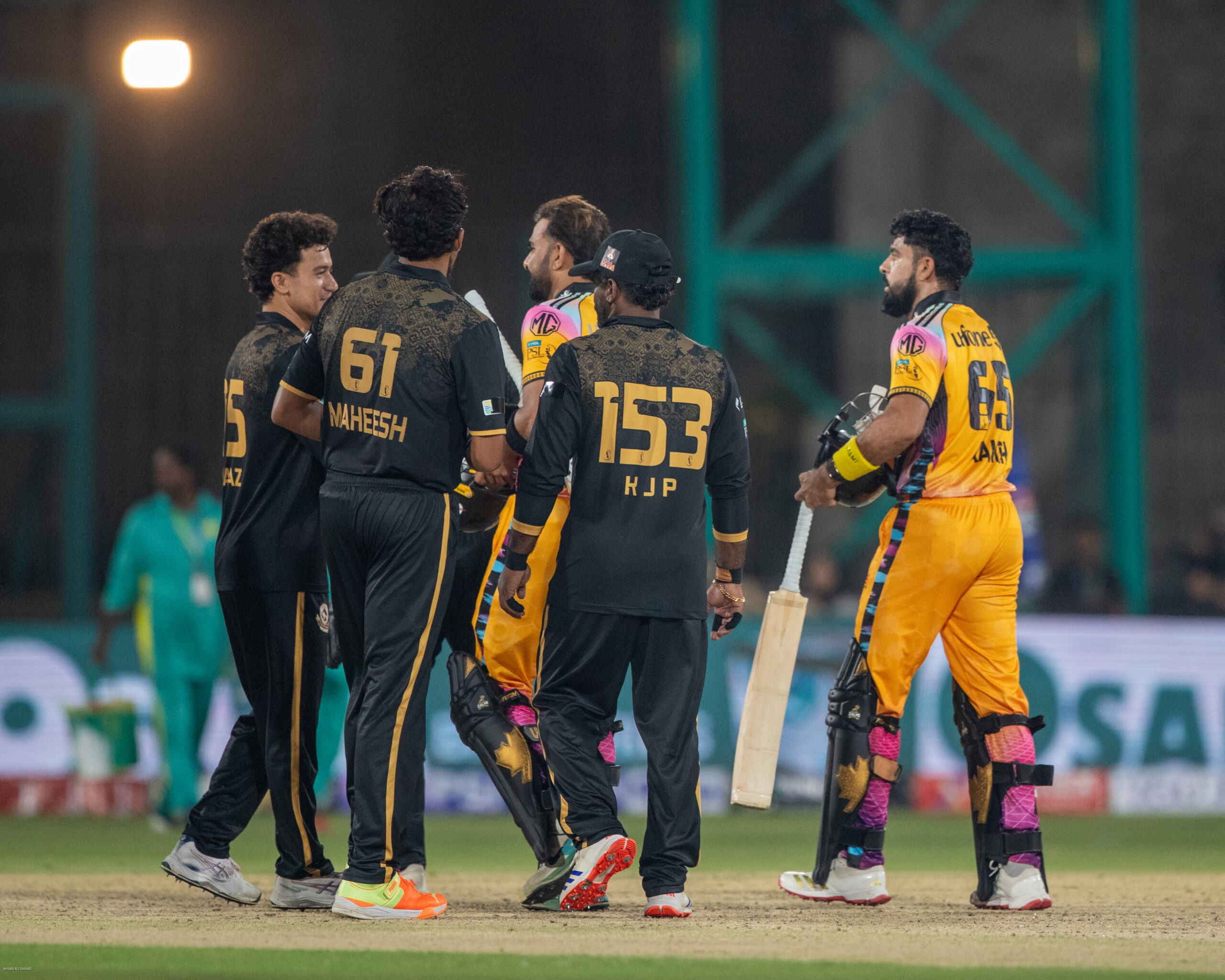
PSL 11 match 16 analysis:
Asher Butt
Islamabad United delivered a commanding statement in the 16th match of the Pakistan Super League (PSL) 2026, dismantling Lahore Qalandars by nine wickets at the National Stadium, Karachi. While the result appeared one-sided on paper, the contest offered deeper insights into tactical awareness, team balance, and the widening gap between a confident Islamabad side and a faltering Lahore outfit. Rather than being a mere statistical victory, United’s triumph underscored their strategic superiority and consistency across departments.
Lahore Qalandars’ modest total of 100 in 18.3 overs reflected a persistent and troubling trend: their batting fragility. From the outset, Islamabad United’s disciplined bowling exposed technical deficiencies and poor shot selection. The early dismissal of Mohammad Naeem for a duck set the tone, while Abdullah Shafique and Haseebullah Khan failed to build meaningful momentum.
The innings lacked intent and stability. Rubin Hermann’s scratchy 4 off 14 deliveries epitomized Lahore’s struggle to rotate the strike, creating pressure that culminated in rash dismissals. Although Sikandar Raza’s 25 off 19 balls provided brief resistance, he found little support from the middle and lower order. Asif Ali’s cameo of 15 added some urgency, but it was insufficient to revive the innings.
More concerning was Lahore’s inability to adapt to Karachi’s conditions. Instead of consolidating after early setbacks, the batters oscillated between caution and recklessness. Their total, bolstered by 13 extras, highlighted a lack of composure and strategic clarity. For a side boasting power hitters and international experience, such a subdued performance exposed a structural weakness that requires urgent rectification.
Islamabad United’s bowling unit deserves immense credit for orchestrating the collapse. Their performance was defined by discipline, variety, and tactical acumen. Chris Green emerged as the standout performer, claiming three wickets while maintaining tight control through his subtle variations. His spell dismantled Lahore’s middle order and prevented any late resurgence.
Imad Wasim and Richard Gleeson complemented Green effectively, sharing four wickets and conceding just 26 runs between them. Imad’s economical figures of 2 for 13 underscored his value as a containing bowler, while Gleeson’s accuracy with the new ball ensured early breakthroughs. Shadab Khan’s all-round contribution further demonstrated Islamabad’s depth, as he struck twice to maintain pressure during the middle overs.
What set Islamabad apart was their cohesive approach. Each bowler executed specific roles with clarity—new-ball penetration, middle-over strangulation, and death-over discipline—resulting in a clinical display that left Lahore with no room for recovery.
Chasing a modest target of 101, Islamabad United approached the task with professionalism and composure. Rather than rushing the chase, they balanced aggression with calculated risk, ensuring there were no unexpected hiccups.
Devon Conway anchored the innings with an unbeaten 59 off 35 balls, showcasing elegance and authority. His ability to find gaps and accelerate at will highlighted his class as a world-class T20 batter. Conway’s innings was marked by impeccable timing, as he struck seven fours and three sixes to neutralize Lahore’s bowling attack.
After Sameer Minhas fell early, Mohammad Faiq provided ideal support with an unbeaten 34 off 19 balls. His fluent strokeplay ensured the required rate never became a concern. Together, Conway and Faiq stitched an unbroken partnership that sealed victory in just 10.2 overs, significantly boosting Islamabad’s net run rate.
Islamabad’s success was rooted in astute leadership and clarity of roles. The decision to field first proved decisive, allowing their bowlers to exploit early conditions and apply scoreboard pressure. Captain Shadab Khan’s intelligent bowling rotations and field placements reflected tactical maturity, ensuring that Lahore never settled into a rhythm.
Conversely, Lahore Qalandars appeared tactically adrift. Their batting order lacked cohesion, and their bowling attack struggled to defend an underwhelming total. Overreliance on marquee players like Shaheen Shah Afridi and Haris Rauf, without adequate support from the batting unit, exposed an imbalance that opponents continue to exploit.
This emphatic victory strengthens Islamabad United’s credentials as serious contenders for the PSL 2026 title. Their balanced squad, featuring dependable batters, versatile all-rounders, and disciplined bowlers, positions them as one of the most formidable teams in the competition.
For Lahore Qalandars, however, the defeat raises critical questions. Their inability to post competitive totals and sustain pressure reflects deeper issues in team composition and execution. Unless their batting unit rediscovers consistency, their playoff aspirations could face significant jeopardy.
The Karachi encounter was less a contest and more a demonstration of Islamabad United’s superiority. Their clinical bowling, composed batting, and tactical precision exposed Lahore Qalandars’ vulnerabilities in emphatic fashion. As PSL 2026 progresses, Islamabad’s all-round strength signals a championship-caliber side, while Lahore must regroup swiftly to remain relevant in the tournament’s fiercely competitive landscape.




