United’s marginal collapse under pressure
Asher Butt
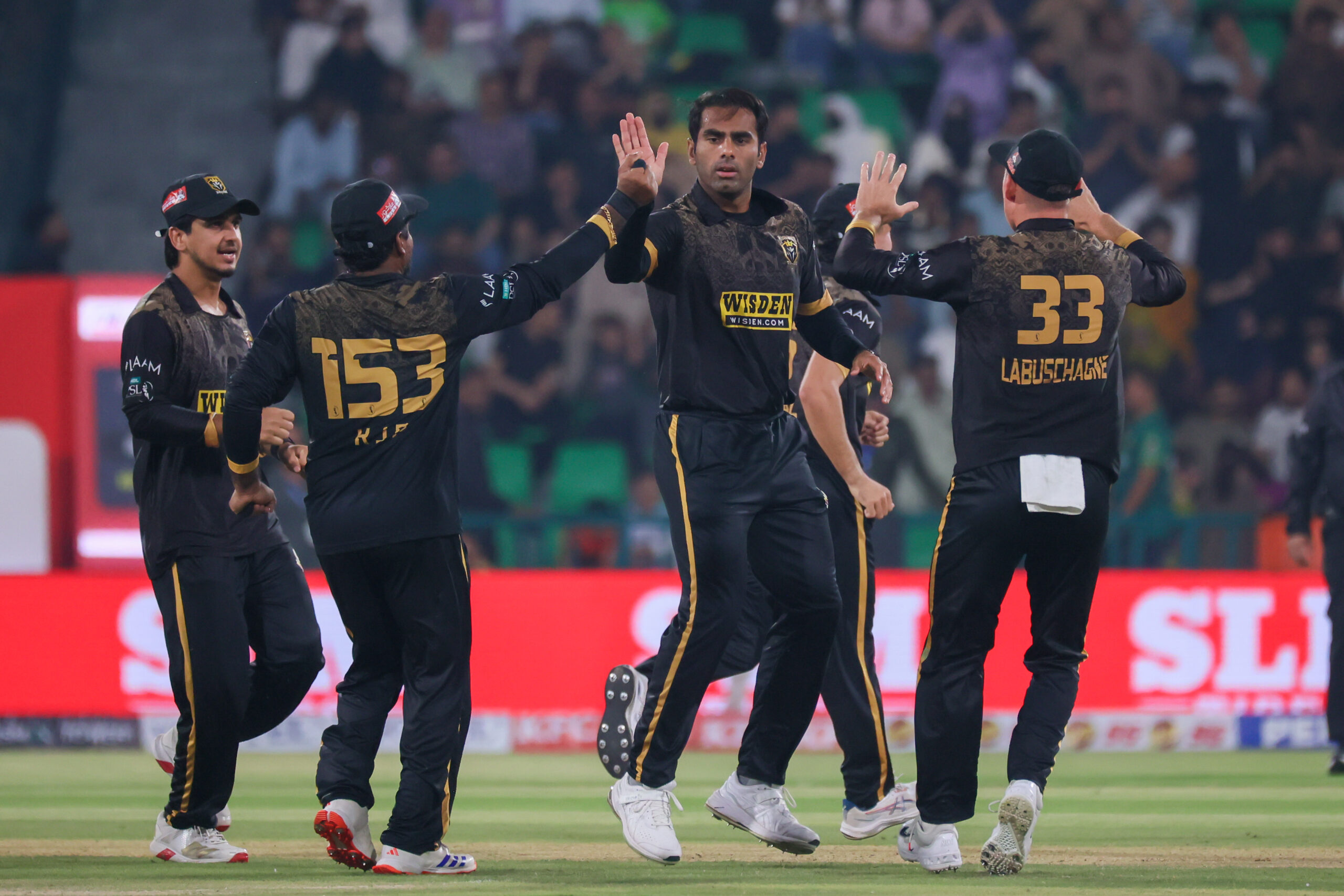
Eliminator 2 between Hyderabad Kingsmen and Islamabad United was less a contest of skill ceilings and more an examination of composure under pressure. Hyderabad’s two-run victory at Gaddafi Stadium was not built on sustained dominance but on winning key micro-battles—moments where execution trumped intent and clarity outlasted panic. In a format where margins are thin, this match exposed how quickly control can slip when decision-making falters.
At first glance, Hyderabad’s 185/5 appears competitive but not overwhelming. The innings itself was uneven, swinging between stability and vulnerability. The early platform laid by Marnus Labuschagne and Saim Ayub was important, but it lacked the acceleration typically required to fully seize a knockout game. At 85/4, Hyderabad were not just under pressure—they were drifting toward a subpar total. What followed, however, was a recalibration of intent rather than blind aggression.
Usman Khan’s unbeaten 61 off 30 balls was the defining intervention. It wasn’t merely the strike rate that mattered, but the clarity of his shot selection. He targeted lengths early, avoided over-committing against spin, and forced Islamabad’s bowlers into reactive fields. Alongside him, Kusal Perera’s 37 off 21 balls provided the kinetic energy that turned a recovery into a surge. Their 101-run stand off 50 balls did more than add runs—it shifted psychological momentum. Islamabad went from controlling the tempo to chasing it.
Yet, even in this phase, Hyderabad benefited from lapses. Mark Chapman’s dropped chance off Usman Khan was not just a missed wicket—it was a structural failure in pressure handling. In knockout cricket, such errors are rarely isolated; they ripple through subsequent decisions. Islamabad’s death bowling reflected that. Lines became predictable, variations mistimed, and lengths inconsistent. Conceding 186 from a position of control was less about Hyderabad’s brilliance and more about United’s inability to close phases.
Chasing 186, Islamabad’s innings began with a familiar problem: instability at the top. Losing two wickets inside three overs forced a reset, but unlike Hyderabad, United never fully regained control of the chase’s tempo. Devon Conway’s 30 was steady but lacked urgency, and Shadab Khan’s 22 off 24 balls exemplified a deeper issue—intent without impact. In a high-pressure chase, dot-ball accumulation becomes a silent killer, and Islamabad allowed it to build.
The turning point came in the middle overs, where Mark Chapman and Haider Ali stitched together a 64-run partnership. On paper, this was the phase that should have sealed the chase. Chapman’s 43 off 26 balls and Haider’s 31 off 16 reintroduced momentum, but crucially, they didn’t eliminate the required rate pressure. Hyderabad’s bowlers, particularly Hassan Khan and Saim Ayub, didn’t dominate but they disrupted rhythm just enough to prevent a clean takeover.
What followed was a classic case of a chase losing shape. Islamabad entered the final three overs needing manageable runs with set batters having recently contributed. Yet, their approach lacked sequencing. Instead of targeting specific bowlers or overs, they played in bursts—boundary, dot, risk. This inconsistency left them exposed at the death.
Mohammad Ali’s 19th over, which conceded 22 runs, should have ended the contest. Instead, it highlighted Islamabad’s inability to capitalize fully. They took the runs but not the control. The final over became a test of nerve rather than skill, and Hyderabad were better prepared for that examination.
Defensively, Hyderabad’s bowling was not flawless, but it was disciplined in moments that mattered. Hunain Shah’s variations, Akif Javed’s control, and even Saim Ayub’s part-time overs contributed to a fragmented but effective strategy: deny rhythm, force errors. They didn’t need to dominate—they needed to disrupt.
Islamabad’s failure, ultimately, was systemic rather than individual. Their chase lacked a clear blueprint. Too many batters played isolated innings instead of constructing a collective approach. Extras (15 in total) further complicated their task, reflecting a lack of discipline that extended beyond batting.
This match was a reminder that knockout cricket is rarely about perfection. It is about resilience in imperfection. Hyderabad Kingsmen were not the better team across 40 overs—but they were better in the moments that defined the game. They absorbed pressure, capitalized on errors, and held their nerve when it mattered most.
For Islamabad United, the defeat will linger not because of the narrow margin, but because of how winnable the game was. They had control in phases, opportunities to break partnerships, and a chase that never spiraled out of reach. Yet, they failed to align intent with execution.
Hyderabad now move on to face Peshawar Zalmi in the final, carrying with them not just momentum but belief forged in adversity. If this match proved anything, it’s that in T20 cricket, control is fleeting—but composure is decisive.