PSL 11 match-3 analysis:
Asher Butt
The third fixture of the Pakistan Super League Season 11 at Gaddafi Stadium turned into a modern T20 run-fest, but beyond the boundary count, it was a contest of chase management and bowling under pressure. Peshawar Zalmi chased down 215 with five wickets in hand against Rawalpindiz, exposing the difference between scoring big and defending big.
Rawalpindiz’s 214: Impressive, but not imposing
On the surface, 214/4 appears a commanding total. The innings, powered by Yasir Khan’s 83 and supported by Mohammad Rizwan and Kamran Ghulam, had all the elements of dominance—strong powerplay, sustained middle overs, and a late push.
However, the underlying issue was phase imbalance.
Rawalpindiz scored freely but did not fully capitalize on their position. At 105/0 in 11 overs, they were set for a total beyond 225. Instead, the innings plateaued briefly before a late surge.
Key Insight: In modern PSL conditions, 214 is competitive—but not beyond reach, especially at a venue like Gaddafi Stadium.
Zalmi’s bowling: Lack of control, not effort
Peshawar Zalmi’s bowling lacked penetration and control for most parts. Apart from Shoriful Islam, no bowler consistently hit effective lengths. The over-reliance on pace allowed Rawalpindiz batters to line up deliveries.
- Short balls sat up
- Yorkers were inconsistent
- Variation was limited
Yet, despite conceding 214, Zalmi managed to avoid complete damage in the final overs—an often overlooked factor that kept the target within range.
The chase blueprint: Structured aggression
Where Rawalpindiz faltered in maximizing phases, Zalmi executed a near-perfect chase template.
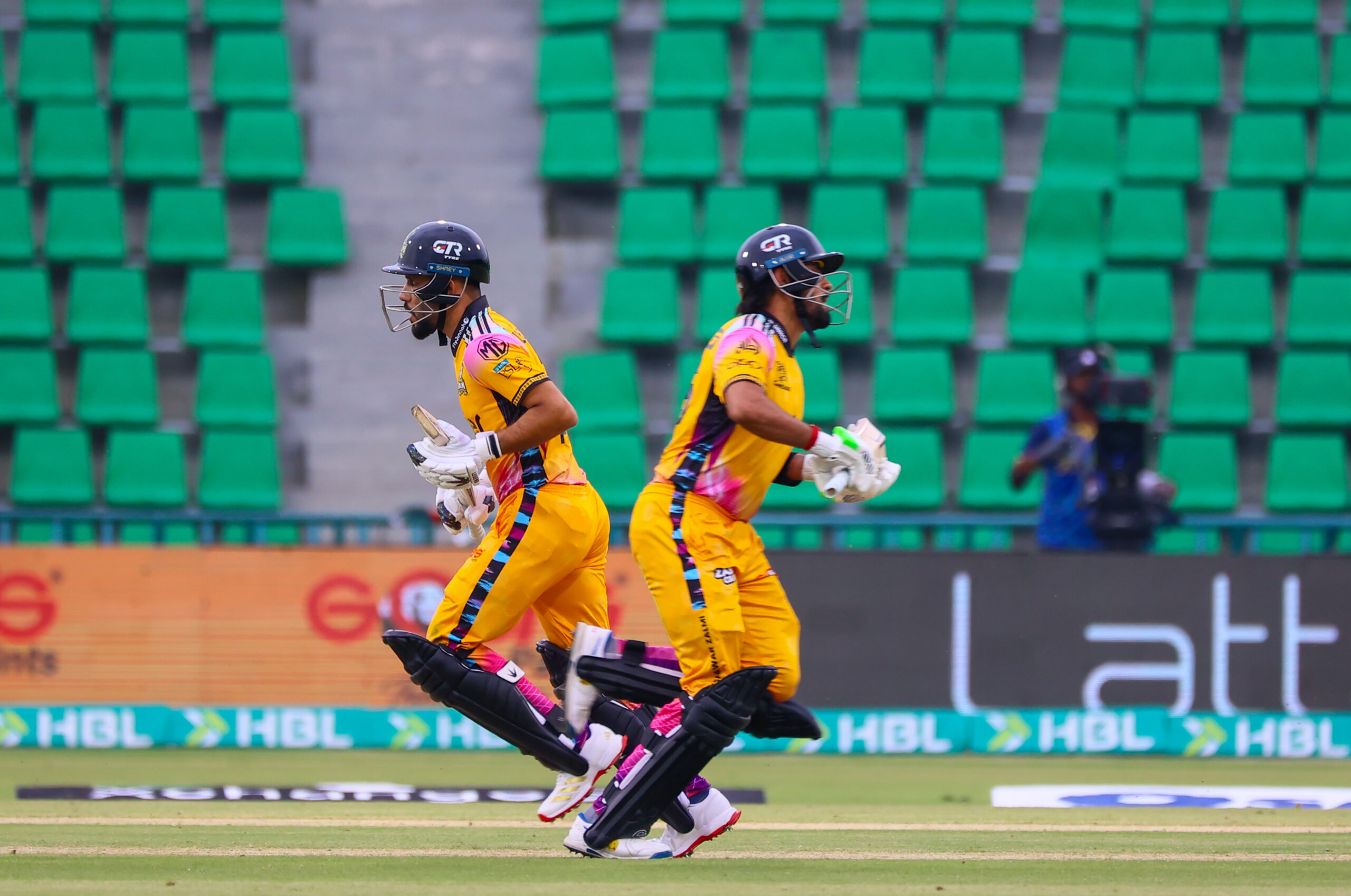
The opening stand between Babar Azam and Mohammad Haris (78 runs) was not explosive in isolation, but it was controlled and risk-aware. A powerplay of 62/0 ensured Zalmi stayed ahead without panic.
Unlike many high chases, Zalmi did not rely on a single batter. Contributions came in waves:
- Haris provided early momentum
- Babar ensured stability
- Kusal Mendis injected acceleration
- Bracewell and Abdul Samad delivered the decisive blow
Turning point: The 14th to 18th over window
At 130/4 in 14.1 overs, the game was delicately poised. Rawalpindiz had an opening, but they failed to capitalize.
The 50-run partnership between Michael Bracewell and Abdul Samad off just 18 balls flipped the match entirely. This was not just hitting—it was targeted assault:
- Weak overs were identified
- Bowlers under pressure were attacked
- Field restrictions (including slow over-rate penalty) were exploited
Key Insight: Zalmi won the match in a four-over burst, not across the full innings.
Rawalpindiz’s bowling: Where the game slipped
Defending 214 requires clarity and composure—Rawalpindiz had neither in the death overs.
- Naseem Shah and Mohammad Amir were expensive and unable to control the run flow
- Amad Butt picked wickets but leaked runs at crucial moments
- Spin options were not used aggressively enough to break momentum
The slow over-rate penalty in the final over, forcing an extra fielder inside the circle, symbolized the lack of control and discipline.
Game awareness: Zalmi stayed ahead mentally
The biggest separator was awareness under pressure.
Zalmi understood:
- When to consolidate (post-wickets phase)
- When to attack (targeting weaker bowlers)
- How to manage the required rate without panic
Rawalpindiz, despite scoring heavily, lacked defensive clarity:
- No clear death-over plans
- Poor execution of yorkers and variations
- Inability to slow the game down
What this means for both teams
For Peshawar Zalmi, this chase reinforces their batting depth and flexibility. The ability to hunt down 215 without over-reliance on a single batter makes them a dangerous unit. However, their bowling remains a concern, particularly in controlling high-scoring games.
For Rawalpindiz, the match serves as a critical lesson. Their batting is formidable, but T20 success demands balance. Without disciplined death bowling and clearer tactical execution, even 200-plus totals may not be safe.
Finally, this was a game where both teams excelled with the bat, but only one adapted to the demands of the chase. In high-scoring T20 cricket, totals alone do not win matches—execution under pressure does. Peshawar Zalmi mastered that art, while Rawalpindiz were left reflecting on what should have been a winning total.