
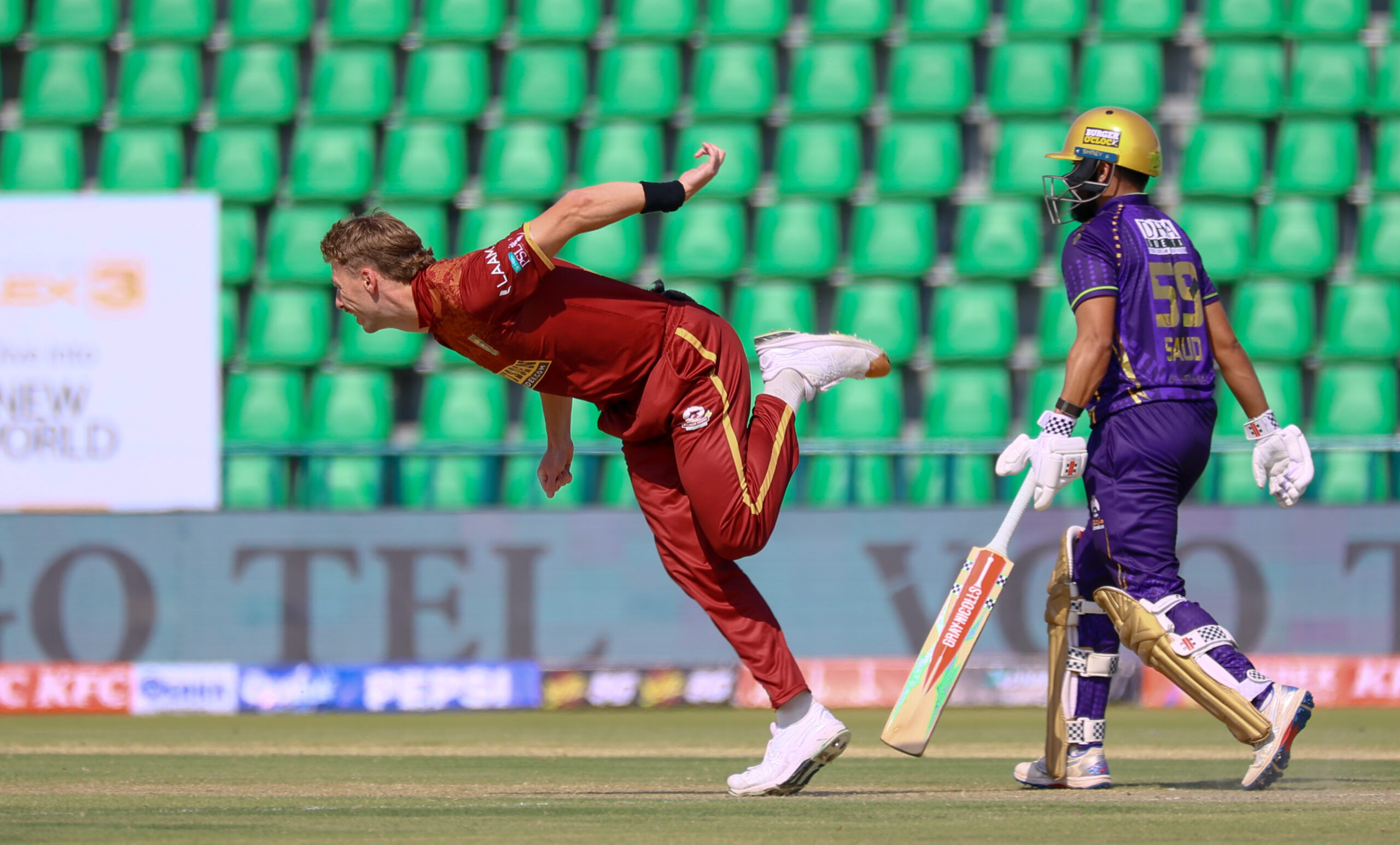
PSL 11 match-5 analysis:
Asher Butt
The fifth encounter of the Pakistan Super League Season 11 at Gaddafi Stadium underlined a familiar T20 truth—partnerships win matches, but structure sustains them. Quetta Gladiators, despite phases of vulnerability, outplayed Hyderabad Kingsmen by 40 runs, exposing deeper issues in the latter’s approach and execution.
Recovery through partnership
Quetta Gladiators’ total of 174/8 was not a straightforward accumulation of runs—it was built on recovery after early setbacks. Losing both Saud Shakeel and Rilee Rossouw inside the powerplay left them at 25/2, a situation that could have spiraled quickly.
What followed was the defining phase of the match. Shamyl Hussain and Hasan Nawaz constructed an 89-run partnership that not only stabilized the innings but recalibrated the scoring tempo. Their approach was measured rather than explosive—rotating strike, absorbing pressure, and capitalizing on loose deliveries.
Quetta did not dominate the powerplay, but they controlled the middle overs—arguably the most decisive phase in modern T20 cricket.
Momentum shift and late-over damage control
At 114/2 in the 14th over, Quetta were positioned for a 180-plus total. However, a sudden collapse—losing four wickets for just 14 runs—highlighted their lingering inconsistency in the middle order.
This is where the innings could have unraveled completely, but Tom Curran’s counter-attacking 31 off 18 balls ensured Quetta regained momentum. His late surge, along with a brief cameo from Abrar Ahmed, pushed the total to a competitive 174.
While Quetta lost control briefly, their ability to recover in the death overs proved decisive.
Bowling effective in phases, ineffective in outcome
Hyderabad Kingsmen’s bowling performance was a mix of discipline and missed opportunities. Riley Meredith and Maheesh Theekshana stood out with key breakthroughs and control in the middle overs.
However, the inability to contain runs at critical junctures—particularly during the Shamyl-Hasan partnership and Curran’s late assault—undermined their effort. Hassan Khan’s expensive spell further tilted momentum in Quetta’s favor.
In essence, Hyderabad bowled well in isolation but lacked collective control.
Collapse rooted in poor structure
If Quetta’s innings was about recovery, Hyderabad’s chase was defined by early collapse and lack of direction.
At 17/2 inside two overs, the tone was set. The dismissals of Saim Ayub and Maaz Sadaqat exposed the fragility of the top order. Unlike Quetta, Hyderabad failed to rebuild through partnerships.
Marnus Labuschagne attempted to stabilize the innings, but his 23 lacked the tempo required in a chase of 175. The middle order compounded the problem, with batters unable to rotate strike or build meaningful stands.
By the time Hassan Khan injected some urgency with a 31 off 19 balls, the required rate had already climbed beyond control.
Clinical and relentless
Quetta Gladiators’ bowling unit executed with clarity and discipline. Abrar Ahmed’s 3/23 dismantled the middle order. Ahmed Daniyal’s economical 2/13 applied sustained pressure. Usman Tariq and Tom Curran complemented with control.
What stood out was their ability to maintain pressure across phases. Unlike Hyderabad, Quetta’s bowlers operated as a unit—each spell building on the previous one.
Powerplay contrast
The contrast between the two teams in the powerplay was stark. Quetta: 45/2 – Recoverable situation; Hyderabad: 37/3 – Structural collapse
This early difference shaped the rest of the contest. Quetta absorbed pressure and rebuilt; Hyderabad never recovered from it.
Experience over impulse
The most telling difference was in game awareness.
Quetta demonstrated patience after early wickets, smart strike rotation in middle overs and calculated aggression in the death overs
Hyderabad, on the other hand played impulsively in the powerplay, failed to build partnerships and showed no clear chase blueprint
This lack of clarity has now cost them back-to-back matches.
Look ahead
For Quetta Gladiators, this win highlights resilience. Despite inconsistencies, their ability to recover from setbacks and execute plans makes them a competitive side.
For Hyderabad Kingsmen, concerns are mounting. Two consecutive defeats have exposed structural weaknesses—particularly in batting stability and match awareness. Without immediate adjustments, they risk falling behind early in the tournament.
So this was not a match decided by brilliance alone, but by understanding the rhythm of T20 cricket. Quetta Gladiators adapted, rebuilt, and executed when it mattered. Hyderabad Kingsmen, in contrast, lacked direction from the outset. In a format defined by moments, Quetta owned the crucial phases—and that made all the difference.




