By Asher Butt
Prominent lovebird enthusiast Adeel Raza Qadri has advised breeders to begin preparation well before the breeding season, stressing that the quality of diet, environment, age and acclimatisation of birds can significantly influence breeding performance.
Sharing his views through Punjabi Love Birds – PLBC, Qadri said breeders often make the mistake of trying to prepare pairs after the season has already started. He said successful breeding is usually the result of months of planning, attentive care and a stable environment rather than last-minute purchases or changes.
Off-season preparation is key
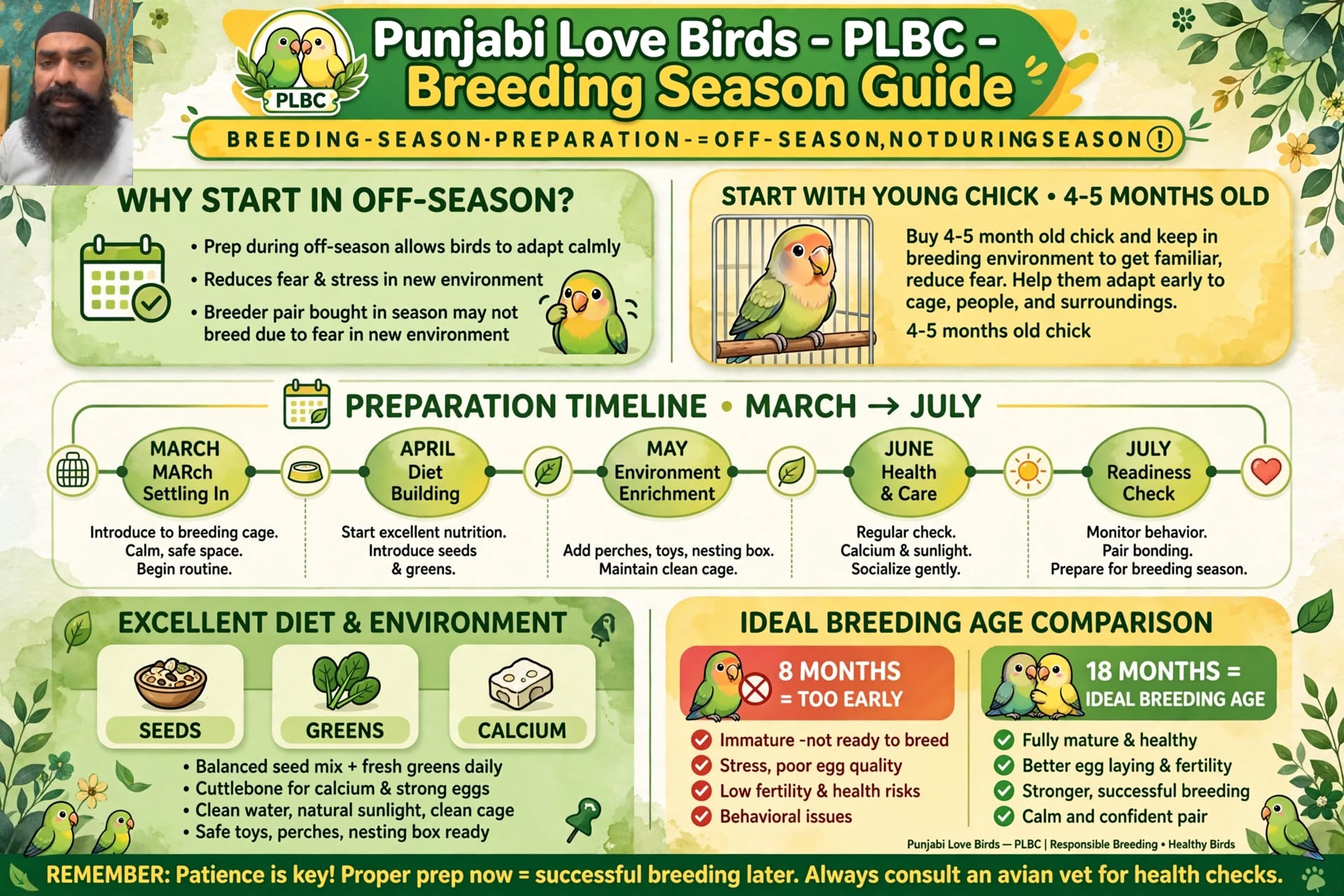
According to Adeel Raza Qadri, the right time to prepare lovebirds is during the off-season. He said breeders should ideally acquire young birds at around four to five months of age and raise them in the same aviary or breeding environment where they are expected to breed later.
He explained that birds become familiar with their cages, surroundings, routine and caretakers over time. This familiarity can reduce fear and stress, allowing the birds to settle more comfortably once they reach breeding maturity.
“Preparation for the breeding season is not done during the season; it is done in the off-season,” he said, adding that birds should be provided with a stable environment long before breeders expect breeding results.
Qadri advised enthusiasts to ensure that young lovebirds receive a balanced diet, clean housing, proper hygiene, sufficient space and consistent care. He said every requirement of a bird should be fulfilled during the preparation phase, as a healthy and well-settled bird is more likely to perform better in breeding.
Avoid expecting instant results from purchased pairs
Adeel Raza Qadri also cautioned breeders against assuming that a newly purchased breeder pair will immediately produce chicks.
He said that even when a pair is bought from a trustworthy breeder and has a known breeding history, it may not reproduce straight away after being shifted to a new location. A change in aviary, cage, noise levels, feeding routine, climate or handling can make a pair nervous and delay breeding.
“Why would someone sell a proven breeder pair?” he questioned, while explaining that the buyer should not consider breeding results guaranteed simply because a seller describes a pair as active or established.
The advice is especially relevant for people entering commercial breeding. A costly pair may require time to settle into its new environment, and a breeder should plan financially and practically for that adjustment period rather than expecting immediate returns.
March to July: Period for conditioning
Qadri suggested that the process of preparing birds for the breeding season should begin around March or April and continue for five to six months through July.
During this period, breeders should focus on proper nutrition, cleanliness, adequate space, disease prevention and a calm environment. The objective is to allow birds to grow, mature and become physically prepared without being exposed to unnecessary pressure.
He said a bird that has been carefully raised and conditioned over several months tends to show its readiness naturally. Breeders should observe the birds’ overall health, feather condition, activity, bonding behaviour and body condition instead of forcing them into breeding prematurely.
Do not breed at eight months, says Qadri
Adeel Raza Qadri strongly discouraged the practice of placing lovebirds in breeding at around eight months of age, saying that early breeding can create avoidable health and reproductive problems.
He said the more suitable age for lovebirds to begin breeding is approximately 18 months. At that stage, birds are generally more physically developed and better able to manage the demands of egg production, incubation and chick rearing.
Specialist aviculture guidance varies by species and individual condition, but it broadly supports avoiding very early breeding. Some experienced breeders recommend waiting until lovebirds are at least 18 months old, while others advise waiting closer to two years, particularly for first-time hens.
Lovebirds can show sexual behaviour before they are fully mature, but early breeding does not always mean that they are physically ready. Guidance for breeders warns that very young hens can face a higher risk of complications, including egg binding, and may be less reliable parents.
Diet, health and environment matter
Qadri’s central message is that breeding success begins with daily husbandry. Breeders should not focus only on nest boxes, pair prices or fashionable mutations. Instead, they should establish a complete care routine that supports the birds before, during and after breeding.
A responsible pre-season programme should include:
- A clean, secure and low-stress aviary environment.
- A suitable, species-appropriate and nutritionally balanced diet.
- Reliable access to fresh drinking water.
- Calcium and mineral support where appropriate, particularly for laying hens.
- Regular monitoring for illness, parasites, poor body condition or behavioural stress.
- Quarantine and health checks for newly introduced birds.
- Enough time for pairs to bond and become comfortable in their breeding space.
- A realistic plan for housing, weaning and rehoming chicks.
Nutritional management is particularly important because breeding, egg-laying and chick-rearing place extra physical demands on parent birds. A proper diet should be adjusted carefully and should not rely on a single seed mix alone. Breeders concerned about diet formulation or health problems should consult an avian veterinarian or an experienced qualified aviculturist.
Responsible breeding over quick profit
Qadri’s comments also challenge the idea that lovebird breeding should be treated as a quick-return business. Buying an expensive pair in peak season and expecting instant breeding results can lead to disappointment, financial loss and welfare concerns.
The better approach is to purchase healthy young birds from reliable sources, allow them to settle, maintain detailed records and wait until they reach suitable maturity. A stable routine, careful pair management and good welfare standards are more valuable than rushing birds into breeding for short-term market gains.
The breeding age of 18 months mentioned by Qadri is a cautious practical benchmark. However, readiness should always be assessed individually, taking into account a bird’s health, body condition, behaviour, species, sex and veterinary advice. Some specialist sources recommend waiting until around two years for first-time breeding, particularly to reduce welfare risks for hens.
Advice for new breeders
For new lovebird keepers, the message is straightforward: begin planning before the season, not after it begins.
A breeder should establish a suitable setup, select healthy birds, allow them to mature naturally and avoid placing immature birds under breeding pressure. If a pair does not breed immediately after purchase, it should not automatically be considered defective; settling into a new environment can take time.
Adeel Raza Qadri’s advice highlights a principle that applies across aviculture: successful breeding is built on patience. The strongest results come from birds that are healthy, mature, properly fed and secure in their environment—not from hurried decisions made in the middle of the season.
عدیل قادری کا بریڈرز کو مشورہ: بریڈنگ سیزن سے پہلے مکمل تیاری ضروری
پنجابی لو برڈز – پی ایل بی سی کے ذریعے گفتگو کرتے ہوئے معروف لو برڈز شوقین اور بریڈر عدیل رضا قادری نے کہا ہے کہ کامیاب بریڈنگ کے لیے تیاری سیزن کے دوران نہیں بلکہ اس سے کئی ماہ پہلے آف سیزن میں کی جانی چاہیے۔
انہوں نے کہا کہ لو برڈز کی اچھی بریڈنگ صرف مہنگا جوڑا خرید لینے یا سیزن شروع ہونے پر نیسٹ باکس لگانے سے ممکن نہیں ہوتی۔ صحت مند غذا، مناسب ماحول، عمر، صفائی، ذہنی سکون اور پرندے کا اپنے ماحول سے مانوس ہونا کامیاب نتائج کے بنیادی عوامل ہیں۔
عدیل رضا قادری کے مطابق، بریڈرز کو فوری منافع یا جلدی میں پرندوں کو بریڈنگ پر لگانے کے بجائے صبر، منصوبہ بندی اور پرندوں کی فلاح کو ترجیح دینی چاہیے۔
آف سیزن میں تیاری کی اہمیت
عدیل رضا قادری نے کہا کہ بریڈنگ سیزن کی تیاری عین سیزن میں شروع نہیں کی جاسکتی۔ ان کے مطابق بہترین طریقہ یہ ہے کہ بریڈر چار سے پانچ ماہ کے کم عمر لو برڈز خرید کر انہیں اسی ایویری، کیج یا ماحول میں رکھے جہاں انہیں مستقبل میں بریڈنگ کرانی ہو۔
انہوں نے بتایا کہ جب پرندہ کم عمری سے ایک ہی ماحول میں رہتا ہے تو وہ اس جگہ، پنجرے، شور، خوراک کے معمولات اور دیکھ بھال کرنے والے شخص سے مانوس ہوجاتا ہے۔ اس کے خوف اور ذہنی دباؤ میں کمی آتی ہے، جس کے باعث بالغ ہونے پر اس کے بہتر بریڈنگ نتائج دینے کے امکانات بڑھ جاتے ہیں۔
“بریڈنگ سیزن کی تیاری سیزن میں نہیں بلکہ آف سیزن میں ہوتی ہے،” عدیل رضا قادری نے کہا، “پرندے کو وقت دینا، اس کی خوراک بہتر کرنا اور اس کے لیے پرسکون ماحول قائم رکھنا ضروری ہے۔”
انہوں نے بریڈرز کو مشورہ دیا کہ کم عمر پرندوں کی نشوونما کے دوران ان کی تمام بنیادی ضروریات پوری کی جائیں، جن میں متوازن خوراک، صاف پانی، مناسب جگہ، صفائی ستھرائی، بیماریوں سے بچاؤ اور کم سے کم ذہنی دباؤ شامل ہیں۔
نیا بریڈر جوڑا فوراً نتیجہ نہیں دیتا
عدیل رضا قادری نے اس غلط فہمی کی بھی نشاندہی کی کہ مارکیٹ سے خریدا گیا بریڈر جوڑا فوراً بچے دینا شروع کردے گا۔
انہوں نے کہا کہ اگر کوئی جوڑا کسی قابلِ اعتماد اور تجربہ کار بریڈر سے خریدا بھی جائے، اور اس کا بریڈنگ ریکارڈ بھی موجود ہو، تب بھی نئے مقام پر منتقل ہونے کے بعد فوری نتیجے کی ضمانت نہیں دی جاسکتی۔
نئے ماحول، مختلف کیج، خوراک میں تبدیلی، درجہ حرارت، شور، لوگوں کی آمدورفت اور ہینڈلنگ کے انداز سے پرندہ خوف زدہ یا پریشان ہوسکتا ہے۔ ایسے حالات میں جوڑا بریڈنگ میں تاخیر کرسکتا ہے یا کچھ عرصے تک مکمل طور پر غیر فعال رہ سکتا ہے۔
عدیل رضا قادری نے کہا کہ خریدار کو صرف اس بنیاد پر فوری بریڈنگ کی امید نہیں رکھنی چاہیے کہ فروخت کنندہ نے جوڑے کو “بریڈر” یا “گارنٹیڈ” قرار دیا ہے۔
ان کے مطابق، بریڈنگ جوڑا خریدنے والے شخص کو یہ بات ذہن میں رکھنی چاہیے کہ پرندے کو نئے ماحول میں ایڈجسٹ ہونے کے لیے وقت درکار ہوتا ہے۔ یہی وجہ ہے کہ فوری منافع کے تصور کے ساتھ خریداری اکثر مایوسی یا مالی نقصان کا سبب بن سکتی ہے۔
مارچ سے جولائی تک کنڈیشننگ
عدیل رضا قادری کے مطابق، لو برڈز کو بریڈنگ کے لیے تیار کرنے کا عمل مارچ یا اپریل سے شروع کرکے جولائی تک جاری رکھنا چاہیے۔
اس عرصے میں بریڈرز کو پرندوں کی خوراک، صحت، ماحول، جسمانی حالت اور عمومی رویے پر خاص توجہ دینی چاہیے۔ پرندے کو بہتر غذا کے ساتھ پرسکون اور صاف ماحول فراہم کیا جائے تاکہ وہ جسمانی طور پر مضبوط اور ذہنی طور پر بریڈنگ کے لیے تیار ہوسکے۔
انہوں نے کہا کہ جو پرندہ پانچ سے چھ ماہ تک اچھی دیکھ بھال، متوازن غذا اور مناسب ماحول میں پلتا بڑھتا ہے، وہ اپنی صحت، سرگرمی اور رویے سے خود ظاہر کردیتا ہے کہ وہ تیار ہو رہا ہے۔
بریڈرز کو پرندوں کے پروں کی حالت، جسمانی وزن، سرگرمی، آپسی بانڈنگ، خوراک کی رغبت اور مجموعی صحت کو باقاعدگی سے دیکھنا چاہیے۔ صرف نیسٹ باکس لگانا یا پرندوں کو ایک ساتھ رکھ دینا بریڈنگ کی تیاری نہیں کہلاتا۔
آٹھ ماہ کی عمر میں بریڈنگ سے گریز
عدیل رضا قادری نے کہا کہ پاکستان میں بعض بریڈرز لو برڈز کو صرف آٹھ ماہ کی عمر میں بریڈنگ کے لیے لگا دیتے ہیں، جو ان کے خیال میں مناسب طرز عمل نہیں ہے۔
انہوں نے مشورہ دیا کہ لو برڈز کو تقریباً 18 ماہ کی عمر کے بعد بریڈنگ پر لگانا زیادہ محفوظ اور بہتر ہے۔ اس عمر تک پرندہ جسمانی طور پر زیادہ مضبوط، ذہنی طور پر زیادہ مستحکم اور انڈے دینے، بچوں کی پرورش اور افزائش نسل کی ذمہ داری کے لیے نسبتاً بہتر تیار ہوتا ہے۔
مختلف ایوی کلچر گائیڈز میں بریڈنگ عمر سے متعلق سفارشات مختلف ہوسکتی ہیں، تاہم ماہرین عمومی طور پر بہت کم عمر پرندوں کو بریڈنگ پر لگانے سے گریز کا مشورہ دیتے ہیں۔ بعض گائیڈز میں کم از کم 18 ماہ اور بعض میں خاص طور پر پہلی بار انڈے دینے والی مادہ کے لیے دو سال کے قریب عمر تک انتظار کی سفارش کی جاتی ہے
کم عمر پرندوں میں جنسی رویے یا انڈے دینے کی صلاحیت ظاہر ہوسکتی ہے، مگر اس کا مطلب لازماً یہ نہیں کہ وہ مکمل جسمانی طور پر بریڈنگ کے لیے تیار ہیں۔ بہت جلد بریڈنگ کروانے سے مادہ پرندے میں کمزوری، انڈہ پھنسنے اور بچوں کی مناسب نگہداشت نہ کر پانے جیسے مسائل کا خطرہ بڑھ سکتا ہے
خوراک، صحت اور ماحول بنیادی عوامل
عدیل رضا قادری کا بنیادی پیغام یہ ہے کہ بریڈنگ کی کامیابی روزمرہ کی اچھی دیکھ بھال سے شروع ہوتی ہے۔ بریڈرز کو صرف میوٹیشن، قیمت یا نیسٹ باکس پر توجہ دینے کے بجائے پرندوں کی مجموعی صحت اور ویلفیئر کو اہمیت دینی چاہیے۔
بریڈنگ سے پہلے ایک ذمہ دارانہ پروگرام میں درج ذیل نکات شامل ہونے چاہئیں:
- صاف، محفوظ اور کم شور والا ایویری یا کیج۔
- پرندوں کی ضروریات کے مطابق متوازن غذا۔
- ہر وقت صاف اور تازہ پانی کی فراہمی۔
- مناسب کیلشیم اور منرل سپورٹ، بالخصوص انڈے دینے والی مادہ کے لیے۔
- بیماری، کمزوری، پرجیویوں اور ذہنی دباؤ کی باقاعدہ نگرانی۔
- نئے خریدے گئے پرندوں کو علیحدہ رکھ کر صحت کا جائزہ لینا۔
- جوڑے کو ایک دوسرے اور بریڈنگ ماحول کے ساتھ مانوس ہونے کے لیے وقت دینا۔
- پیدا ہونے والے بچوں کی رہائش، خوراک، دیکھ بھال اور ذمہ دارانہ فروخت یا منتقلی کی پیشگی منصوبہ بندی۔
بریڈنگ اور بچوں کی پرورش کے دوران والدین پرندوں کو عام حالات کے مقابلے میں زیادہ غذائیت درکار ہوسکتی ہے۔ اس لیے غذا صرف ایک قسم کے دانے تک محدود نہیں ہونی چاہیے۔ اگر پرندوں کی صحت، غذا یا انڈوں سے متعلق کوئی مسئلہ ہو تو مستند ایویئن ویٹرنری ڈاکٹر یا تجربہ کار بریڈنگ ماہر سے مشورہ کرنا چاہیے۔
فوری منافع نہیں، ذمہ دارانہ بریڈنگ
عدیل رضا قادری نے اس سوچ کی حوصلہ شکنی کی کہ لو برڈز بریڈنگ فوری منافع کا ذریعہ ہے۔ ان کے مطابق، سیزن میں مہنگا جوڑا خرید کر فوراً بچے لینے کی توقع حقیقت پسندانہ نہیں۔
بہتر طریقہ یہ ہے کہ صحت مند اور کم عمر پرندے قابلِ اعتماد ذرائع سے خریدے جائیں، انہیں مناسب ماحول میں وقت دیا جائے، ان کی نشوونما کا ریکارڈ رکھا جائے اور مکمل بلوغت کے بعد بریڈنگ کے لیے استعمال کیا جائے۔
انہوں نے کہا کہ ایک مستحکم روٹین، معیاری خوراک، صحت کی نگرانی، درست جوڑا بندی اور صبر کسی وقتی مارکیٹ ریٹ سے زیادہ اہم ہیں۔
نئے بریڈرز کے لیے اہم پیغام
نئے لو برڈز بریڈرز کے لیے عدیل رضا قادری کا مشورہ واضح ہے: سیزن شروع ہونے کا انتظار نہ کریں، بلکہ پہلے سے منصوبہ بندی کریں۔
پرندوں کے لیے موزوں جگہ بنائیں، صحت مند پرندوں کا انتخاب کریں، انہیں قدرتی طور پر بالغ ہونے دیں اور کم عمر میں بریڈنگ کے دباؤ میں نہ ڈالیں۔
اگر خریدا گیا جوڑا فوری بریڈنگ نہ کرے تو اسے فوراً ناکام یا خراب جوڑا قرار نہیں دینا چاہیے۔ نئے ماحول میں ایڈجسٹ ہونے کے لیے وقت درکار ہوتا ہے۔
عدیل رضا قادری کے مطابق، لو برڈز کی کامیاب بریڈنگ کا اصل اصول صبر اور بہتر دیکھ بھال ہے۔ بہترین نتائج ان پرندوں سے حاصل ہوتے ہیں جو صحت مند، بالغ، متوازن غذا پر، پرسکون ماحول میں اور اپنے بریڈنگ سیٹ اپ سے پوری طرح مانوس ہوں۔