
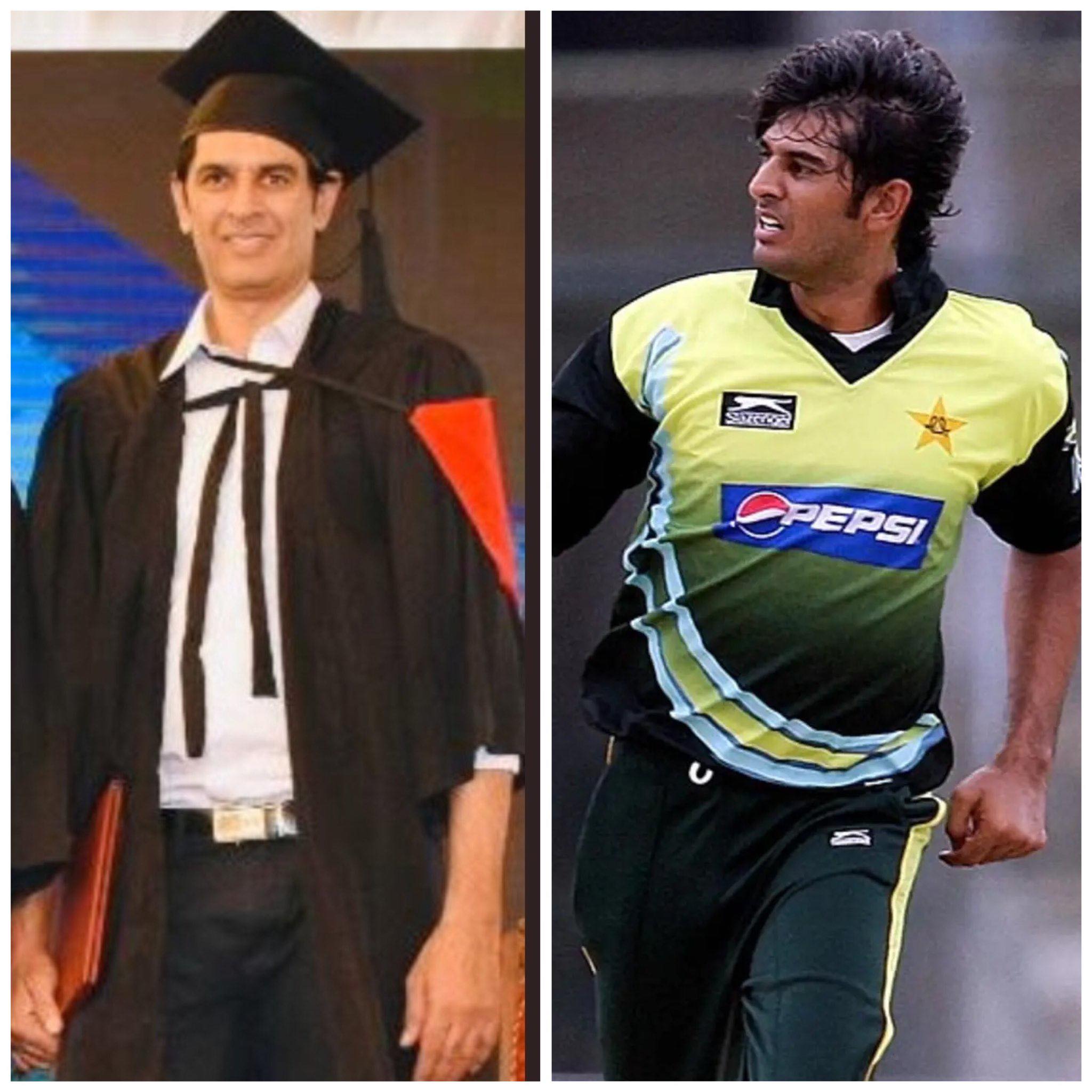
Special Correspondent
In a sporting landscape often marred by patronage and legacy bias, the profile of Abdur Rauf Khan stands out as a compelling example of merit, professionalism, and overlooked potential. Despite being the highest wicket-taking fast bowler in Pakistan’s first-class cricket history with 696 wickets, Rauf has yet to be offered a meaningful role within the national coaching setup—a gap that raises serious questions about the selection culture within the Pakistan cricket.
Academic and professional credentials
Abdur Rauf Khan’s qualifications reflect a rare blend of athletic achievement and academic excellence:
- Master’s in Political Science
- Master’s in Sports Science
- MPhil in Sports Science
- Diploma in Biomechanics – LUMS University
- Diploma in Sports Management
- Level 2 Coaching Certification – UK and Pakistan
- Level 1 Match Referee Certification
These credentials position him not only as a seasoned athlete but also as a technically equipped mentor capable of contributing to modern cricket coaching, player development, and performance analysis.
Cricketing record
Rauf’s record of 696 first-class wickets—achieved without the benefit of county cricket exposure—underscores his consistency, endurance, and mastery of the craft. His achievements on the domestic circuit remain unmatched among fast bowlers, yet his exclusion from coaching roles reflects a troubling disconnect between performance and opportunity.
Systemic challenges
The absence of Abdur Rauf Khan from the national coaching framework is emblematic of a broader issue: the persistence of non-meritocratic practices in sports governance. In Pakistan, aspiring professionals often face institutional barriers unless they are connected to former cricketers, political figures, or military elites. Those who maintain integrity and avoid controversial affiliations are frequently sidelined, regardless of their qualifications or contributions.
This is not merely a critique—it is a reflection of a system that needs reform. Abdur Rauf’s case should serve as a benchmark for change, encouraging the PCB and other governing bodies to prioritize merit, transparency, and professional development over legacy and favoritism.
A clear message
Abdur Rauf Khan’s journey offers a powerful lesson to Pakistan’s younger generation: excellence may not always be rewarded immediately, but it remains the foundation of long-term credibility. His story is not one of defeat, but of resilience—a reminder that the pursuit of professionalism and integrity is a path worth taking, even in the face of systemic adversity.




