Asher Butt
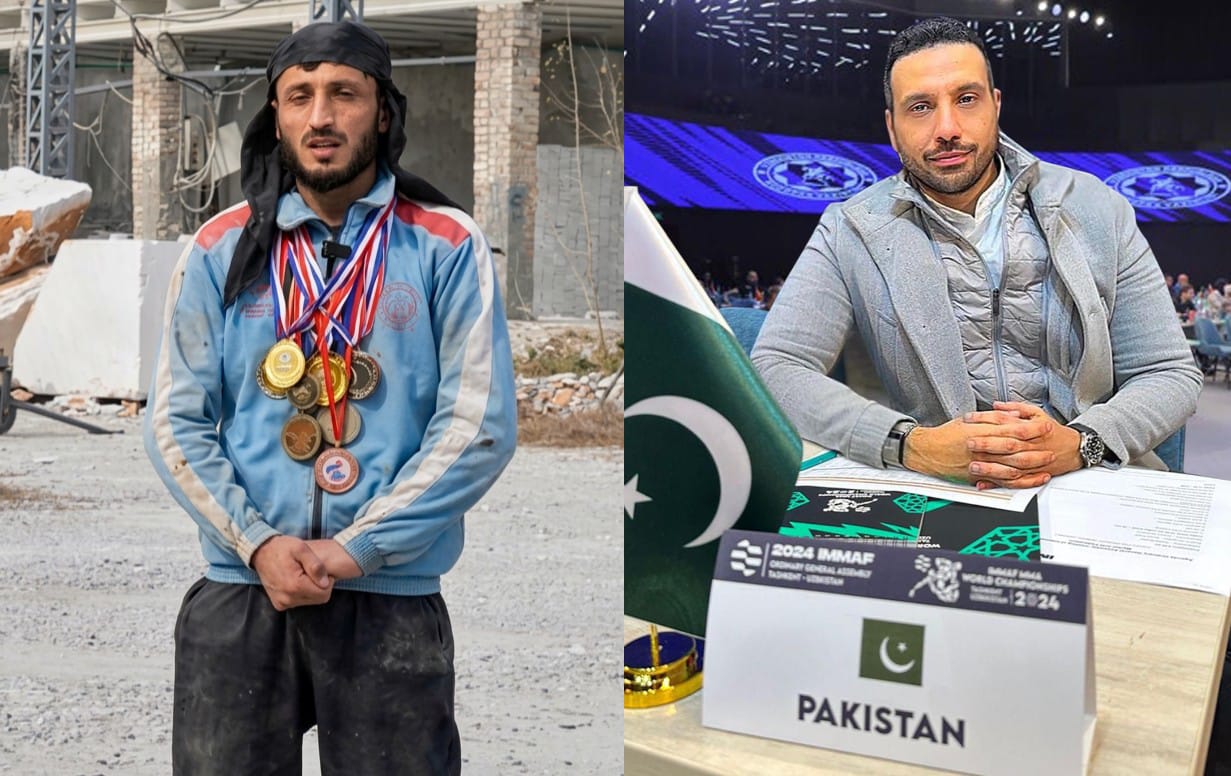
President of the Pakistan Mixed Martial Arts Federation, Omar Ahmed, has called for a fundamental shift in Pakistan’s sporting framework, stressing that athletic success must translate into sustainable professional careers rather than ending at podium finishes.
In a statement, Ahmed underscored that while Pakistan continues to produce talented athletes and medal winners across a range of disciplines, a majority face financial instability due to the absence of structured professional pathways. “Sport is no longer just competition; it is an industry. If medals do not lead to contracts, rankings, or earnings, then the system needs to be examined,” he remarked.
He noted that the country’s sports ecosystem remains heavily reliant on domestic recognition, with limited integration into international professional markets. As a result, achievements at national and even international amateur levels often fail to secure long-term career prospects for athletes.
Focusing on combat sports, Ahmed explained that Olympic disciplines such as taekwondo, karate, wrestling, and boxing provide valuable exposure but often lack consistent earning avenues beyond major competitions. In contrast, he highlighted the rapid global rise of Mixed Martial Arts, which offers a more structured progression from amateur to professional levels.
He pointed to the role of the International Mixed Martial Arts Federation in organizing large-scale amateur championships that act as feeder systems for professional promotions. These pathways, he said, enable fighters to transition into professional circuits where earnings can range between $25,000 to $30,000 per bout, providing financial stability and career growth.
Ahmed emphasized that the PMMAF has been actively working to replicate this model in Pakistan by ensuring consistent participation in international competitions, securing medals, and hosting regional events. He cited the Pakistan Open MMA Championship as a key initiative, serving both as a national selection platform and a gateway for athletes to gain international exposure and scouting opportunities.
“Our goal is to ensure that medals are not the end point but the beginning of a professional journey,” Ahmed said, adding that Pakistan’s broader sports sector could benefit from adopting similar models focused on long-term athlete development and global integration.
He concluded that aligning sporting success with professional opportunities is essential for transforming Pakistan’s achievements into sustainable careers, ensuring athletes are recognized not only for their medals but also for their professional accomplishments in the global arena.